



.svg)
.svg)
.svg%201.svg)



Get Business Email
No domain name required

Every loyalty platform on the market claims to increase repeat purchases. Most of them will, to some degree. The harder question is which one fits the way your business actually operates, because the gap between a points app bolted onto a single till and a platform running a global quick-service restaurant programme is not a matter of degree. They are different products sold under the same category name.
This guide covers seven platforms, each with a clear answer to the question "who is this actually for?" Choosing the best customer loyalty program software that fits your business can make all the difference.
Quick Comparison
1. SessionM - Best for QSR, restaurants, fuel, and CPG
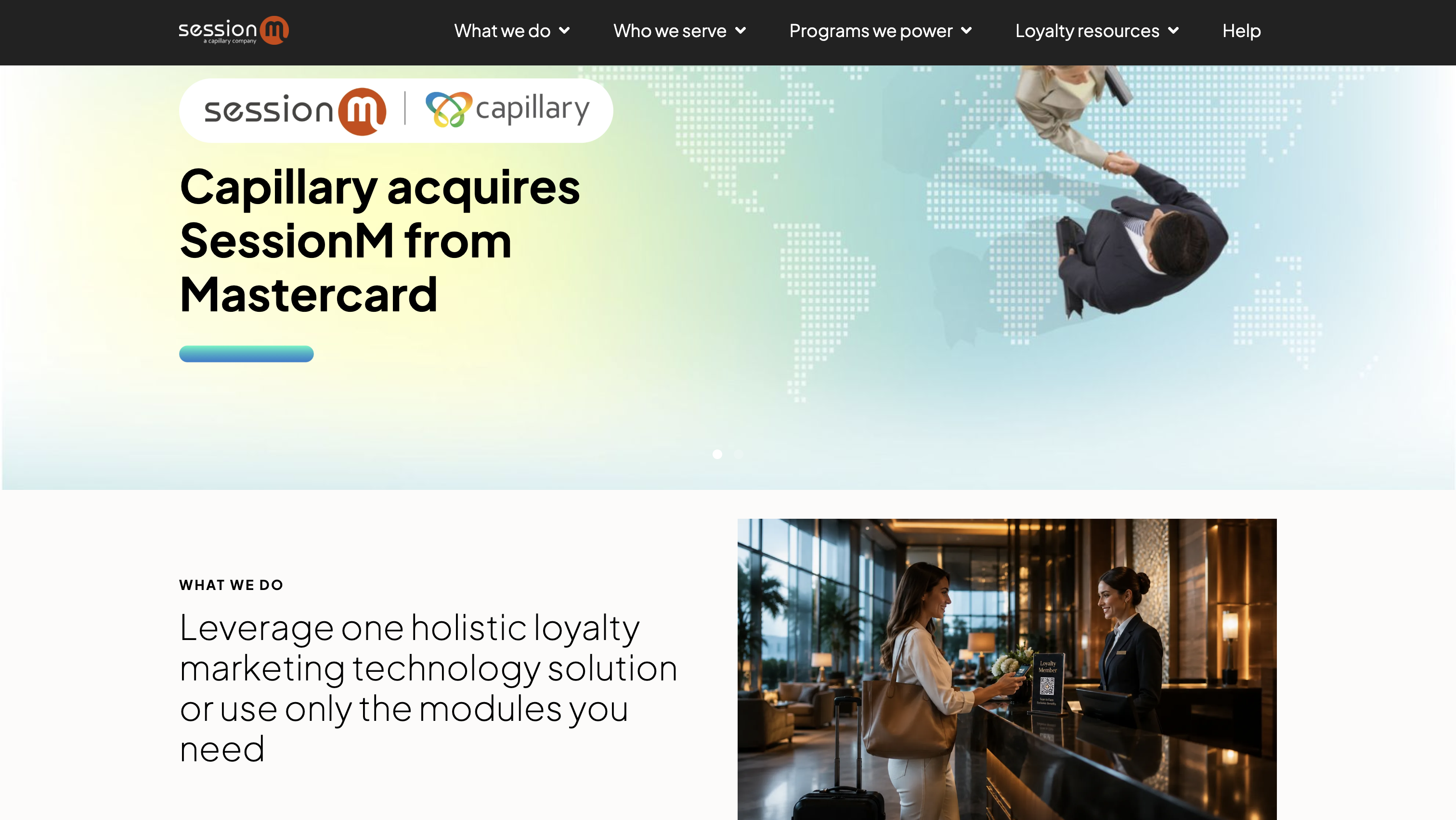
Best for: Quick-service restaurant chains, multi-location dining groups, fuel and convenience retailers, and consumer goods brands running high-frequency programmes.
SessionM has powered MyMcDonald's Rewards since 2021, in a partnership dating back to 2018. That programme handled more than $30 billion in transactions in 2024 across mobile, drive-through, counter and kiosk. If you want a single proof point for whether a loyalty platform can operate at a quick-service scale, that is it.
What makes SessionM suited to these categories specifically is how it handles customer identity. Most loyalty platforms track points against transactions and reconcile overnight. SessionM builds a unified customer profile first and updates it in real time, then runs loyalty mechanics on top.
In a high-frequency environment that distinction decides what is possible. A customer at a drive-through window or a fuel pump is present for ninety seconds. The offer you can make depends on whether the platform already knows what they bought last week and what is in front of them now. Batch processing cannot support that.
Fuel and convenience is the sharpest example of the same problem. Those programmes involve multi-step transactions like a fuel purchase and an in-store purchase that most loyalty engines record as two unrelated events. SessionM treats them as one connected behaviour, which is the difference between rewarding a visit and rewarding a fill-up that happens to include coffee.
For CPG brands the constraint is different again: they rarely own the point of sale. SessionM's history here runs back to receipt-capture technology built specifically so consumer goods companies could connect mobile engagement to purchases made in someone else's store.
Key capabilities:
- Real-time customer profile updates and dynamic segmentation with custom data types
- Points banks and tier management through a configurable rules engine
- Scheduled and triggered omnichannel campaigns from a self-serve hub
- Discounts, promotions and rewards firing at the point of sale as well as across digital channels
- Multi-step transaction handling for fuel and convenience
- Programme performance dashboards and daily reporting
- Loyalty strategy, implementation and optimisation services
Programme types: earn-and-burn, offer programmes, paid loyalty, tiered programmes.
Used by: McDonald's, Starbucks, Chipotle, Arcos Dorados, Kudu,Unilever and Huggies, among other restaurant, fuel, retail and consumer goods brands.
Recognition: Named Best Overall Loyalty Marketing Platform for 2022 by Martech Breakthrough, and received a 2023 Loyalty360 Best in Class award for Technology.
Pricing: Enterprise licence, quoted.
Watch out for: This comes with implementation and strategy work attached rather than a self-serve signup. A single-location restaurant does not need it and will not get value from it.
2. Smile.io - Best free loyalty program software
Best for: Small e-commerce stores that want a working programme without a budget approval.
Smile.io is the most widely deployed loyalty app on Shopify, and the free tier is the reason. You get points and basic referrals at no cost, with Smile.io branding on the customer-facing widget, and setup takes under an hour. For a store testing whether a loyalty programme changes behaviour at all, it removes the only real objection. Notable clients include Death Wish Coffee, Monos, and Roka.
The trade is customisation. On the free and entry plans you work within Smile.io's mechanics rather than building your own.
Key capabilities:
- Points and referral programmes on a permanent free plan
- VIP tiers and points expiry on higher tiers
- Integrations with Klaviyo, Gorgias, Judge.me, Loox and Recharge
- On-site rewards panel and nudges
- White-label branding removal on paid plans
Pricing: Free up to roughly 200 monthly orders. Paid plans published from around $15 per month for startups, rising to roughly $199 for the tier unlocking VIP tiers and advanced analytics, then to around $999 at higher volumes. Enterprise is quoted.
Watch out for: Pricing is indexed to monthly order volume and the jumps between tiers are steep rather than gradual. Success at retention pushes you up the ladder. Model the cost at your projected volume, not your current one.
3. Capillary Technologies - Best enterprise loyalty software and AI capabilities
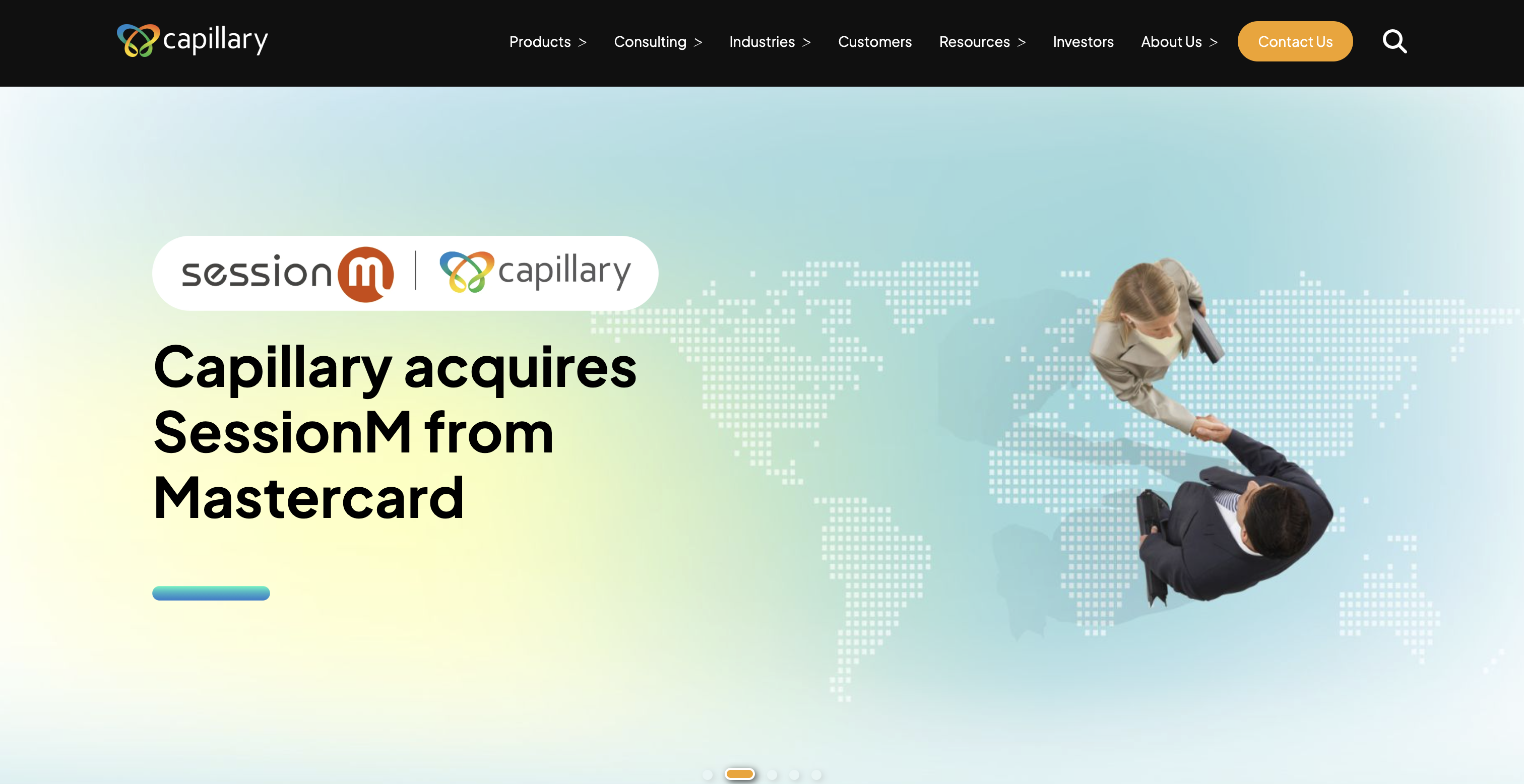
Best for: Retail and consumer brands running enterprise loyalty across multiple markets, currencies or brands.
Capillary Technologies was named a Leader in The Forrester Wave™ Loyalty Platforms, Q4 2025 report, and the platform reflects that scope: from Loyalty Program Software for programme management, to CDP for unifying customer data across online and offline channels to Customer Insights Platform for analytics and much more. It supports cross-brand journeys, multi-currency accrual and redemption, and coalition structures. Its clientele includes 20+ Fortune 500 brands such as Dell and Hertz.
The distinguishing capability in 2026 is aiRA, which is not an analytics add-on but the interface to the platform. A marketer describes what they want in plain language, and aiRA builds the audience, optimises the reward, drafts the messages and configures multi-channel delivery, with human approval at every step. It executes across countries and languages from the same brief. The company frames this against a conventional enterprise campaign workflow spanning multiple phases and teams over several weeks.
That is the meaningful distinction in enterprise loyalty AI right now. Most platforms use machine learning for segmentation and churn prediction, but Capillary Technologies has made AI the way you operate the platform.
Key capabilities:
- Conversational campaign creation via aiRA, with human-in-the-loop approval
- Multi-country, multi-language campaign execution from one brief
- Natural-language segmentation without SQL
- Nudge framework for behavioural prompts and next-best-action
- CDP software unifying online and offline customer data
- Multi-currency and cross-brand accrual and redemption
Pricing: Enterprise licence, quoted.
Watch out for: Budget for data preparation and change management alongside the licence. AI campaign generation is only as good as the customer data underneath it, and unifying that data is usually the longest phase of any enterprise implementation.
4. Square Loyalty - Best small business loyalty software
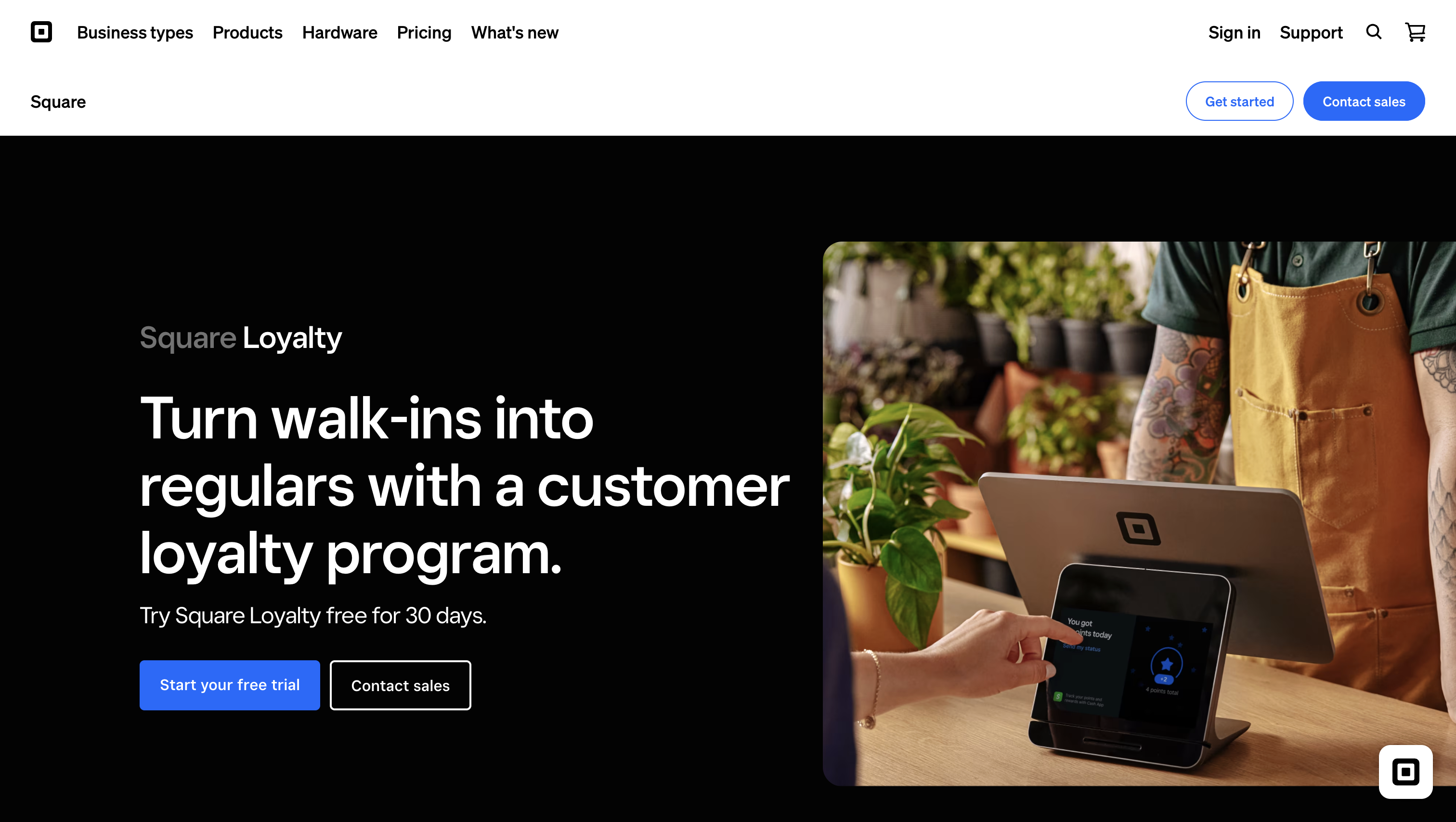
Best for: Cafés, salons, barbers and single-location retailers already running Square as their point of sale.
Square Loyalty is the loyalty layer built into Square POS. Customers enrol at checkout with a phone number, staff award points as they process the sale, and customers receive automatic text updates and an Apple Wallet pass. You can configure points per visit, per dollar spent, or per item, and layer VIP tiers on top.
The integration is the entire argument. There is no second system for staff to learn and no enrolment friction, and in a small business the programme lives or dies on whether a busy till operator remembers to ask.
Key capabilities:
- Enrolment at the register by phone number
- Points per visit, per dollar or per item
- Bronze/Silver/Gold style VIP tiers
- Automatic customer text notifications
- Apple Wallet pass
- Basic customer analytics inside the Square dashboard
Pricing: Square Plus costs $49 per month per location, scaling with loyalty visit volume. While Square Premium goes for $149 per month per location and provides more advance features. There is also a very basic free tier that you can try out.
Watch out for: It rewards transactions and nothing else (no referrals, reviews, or engagement rewards). It is locked to Square hardware, so switching POS means rebuilding the programme. And the per-location fee multiplies with no volume discount: a three-site business pays three times before proving the concept once.
5. Voucherify - Best API-first loyalty software
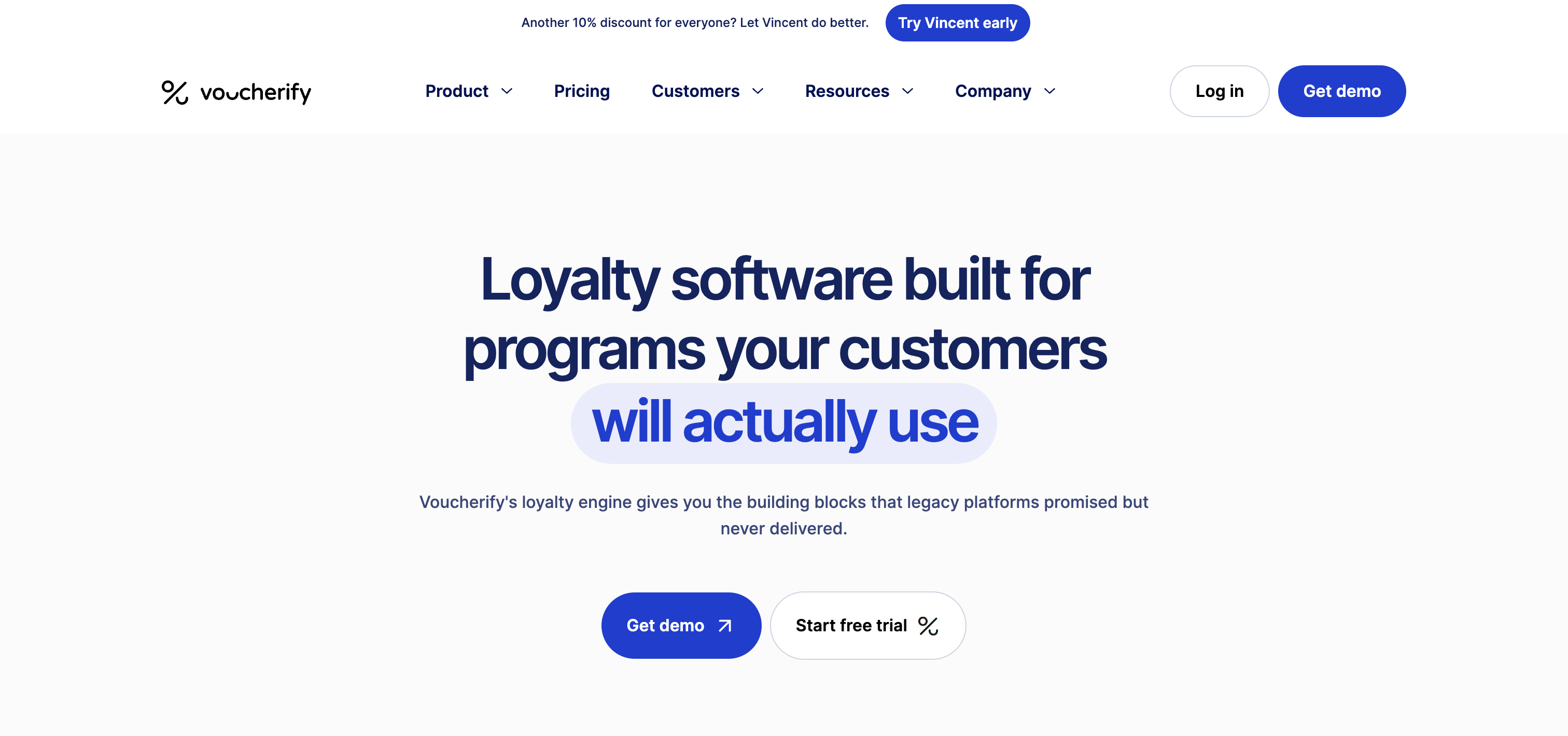
Best for: Engineering-led teams building custom loyalty and promotion logic into an existing stack.
Voucherify inverts the usual model. Instead of a platform with a marketer's dashboard and an API bolted on, it is an API-first promotion and loyalty engine with a dashboard on top. For teams running headless commerce or a composable stack, that difference decides whether the platform fits at all.
The platform is MACH-certified, and it handles promotions and loyalty in one engine rather than the more common arrangement of two systems patched together. It supports multiple point types running simultaneously (miles, cashback, partner credits), each with its own expiration rules, pending periods and conversion logic.
Key capabilities:
- API-first architecture with SDKs and developer documentation
- Promotions and loyalty in a single engine
- Multiple concurrent point types with independent rules
- Validation rules builder for granular campaign targeting
- Coupons, gift cards, referrals, giveaways and discounts alongside loyalty
- Integrations including Shopify, BigCommerce, Adobe Commerce, Salesforce, Braze, Segment and Twilio
Used by: Philips, trainline, and Vodafone, among 300-plus companies.
Pricing: Subscription priced on API call volume rather than members or orders, which decouples cost from programme success. Published plans from €600 per month for Business, €1200 for Orgnaization, and then with custom enterprise pricing. There is a 60-day free trial available.
Watch out for: This is a build, not a launch. Without developer capacity you will not get value from what makes it good.
6. Kognitiv - Best coalition loyalty platform
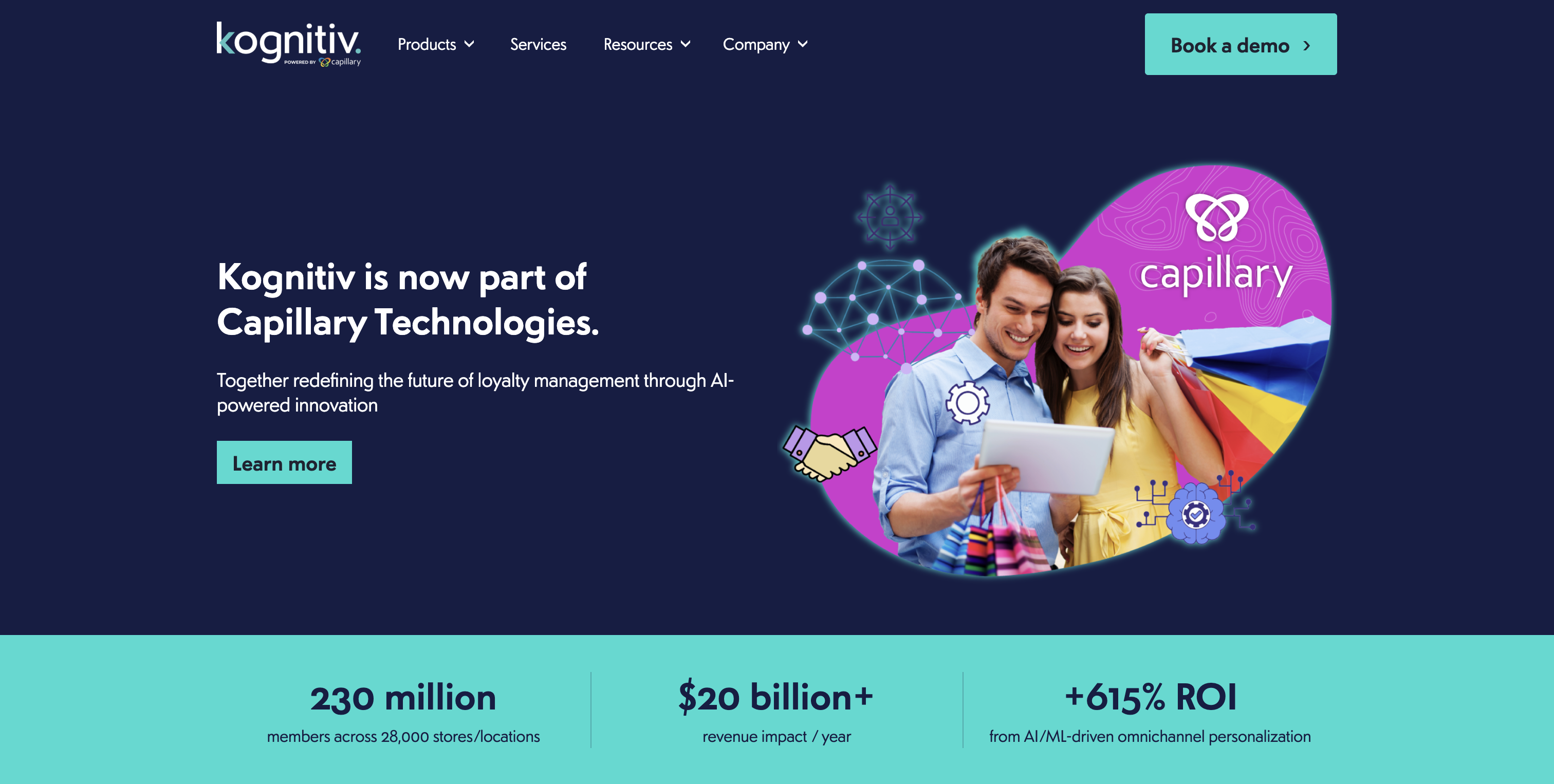
Best for: Brands building loyalty across a partner network rather than inside a single storefront.
Kognitiv's premise is that a programme confined to one brand leaves value unclaimed. It is built for collaborative ecosystems where customers earn and redeem across a curated set of complementary partner brands, the structure behind most large coalition schemes.
The platform handles points-based programmes, tiered memberships, experiential rewards and coalition structures, with AI-driven segmentation determining which offers reach which members.
Key capabilities:
- Cross-brand earn and redemption across a partner ecosystem
- Points, tiers, experiential rewards and coalition structures
- AI-driven segmentation and offer targeting
- Omnichannel member experiences
Used by: More than 30 enterprise brands across over 20 countries, including PetSmart, Hallmark, Kirkland's, Curaleaf, Sharjah Co-op, Leading Hotels of the World, and the Yuu Rewards coalition programme.
Pricing: Enterprise licence, quoted.
Watch out for: A coalition programme is as much a commercial negotiation as a technology project. The platform handles cross-brand accrual and settlement; the partner agreements underneath it are yours to build, and they are usually the harder part.
7. TrueLoyal - Best for receipt-based and omnichannel loyalty
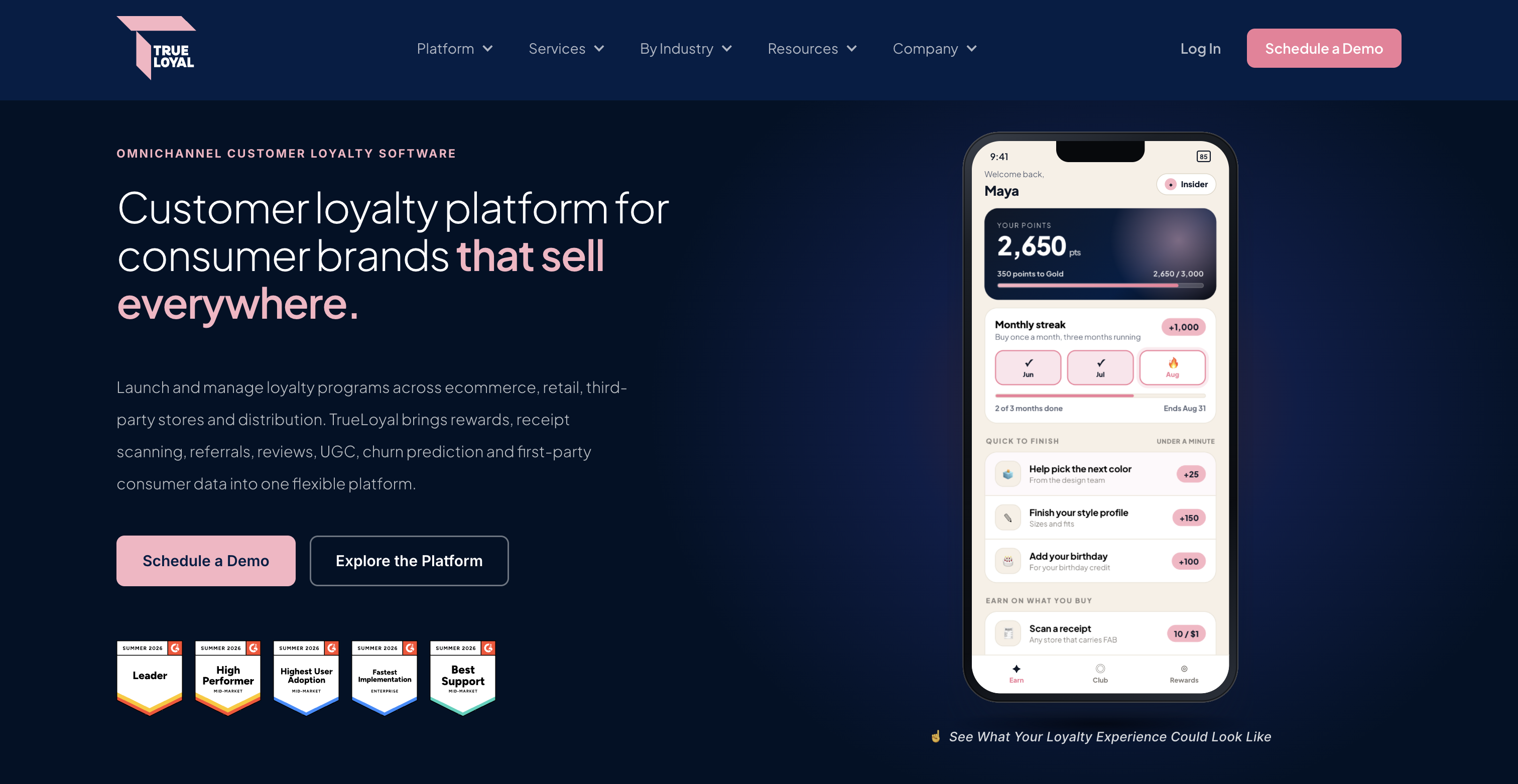
Best for: Brands that need to reward purchases made outside their own channels.
TrueLoyal is the platform most buyers still search for under its former name, Zinrelo. Its defining capability is receipt scanning, which solves a specific problem: brands selling primarily through third-party retail have no transaction data of their own. Receipt-based validation gives them a loyalty programme without owning the point of sale.
Beyond that, it rewards across what the company describes as multiple dimensions of loyalty, from transactional, to social, referral, engagement, behavioural and emotional. Awarding points for reviews, social shares, profile completion and event participation alongside purchases.
Key capabilities:
- Receipt scanning for purchases through third-party retailers
- Rewards for non-transactional behaviour
- Tiered programmes and multi-channel accrual and redemption
- Integrations including Shopify, Magento, BigCommerce, Salesforce, PrestaShop and WordPress
- Dedicated onboarding and ongoing programme review
Pricing: Custom quote, scaled by member count, transaction volume and modules. Trial available.
Watch out for: The rebrand affects anyone researching this platform. Zinrelo merged with TINT in August 2025 and relaunched as TrueLoyal in March 2026, so older reviews describe a narrower product.
How to choose
Where does the transaction happen? One till, a POS-native tool is cheapest. Multiple channels, you need a platform that stitches identities into one record. Third-party retail only, you need receipt validation.
What are you rewarding? Most entry-level tools reward spend and nothing else. Reviews, referrals, app engagement and event attendance are the common gaps.
How is it priced? Per location, per monthly order volume, per API call, or annual licence. Order-volume pricing surprises people, because retention success moves you up the tiers.
Who builds and runs it? Entry tools launch in an afternoon. API-first platforms need developers. Enterprise platforms come with strategy and implementation services attached, because programmes at that scale fail on design more often than technology.
Frequently asked questions
What is the best loyalty program software for restaurants and QSR brands?
SessionM is the strongest fit for quick-service and multi-location dining, and the clearest evidence is that it has powered McDonald’s loyalty program, handling over $30 billion in transactions annually. Its real-time customer profiles are what allow a relevant offer at the moment of ordering rather than the day after. PAR Punchh and Capillary Technologies are two serious contenders also worth evaluating for restaurant groups operating across several countries.
What is the best free loyalty program software?
Smile.io offers the most capable permanent free plan, covering points and referrals up to roughly 200 monthly orders with Smile.io branding on the customer-facing widget. Voucherify also has a free version, though it is aimed at development teams evaluating the API rather than merchants running a live programme.
Which loyalty platform has the best AI capabilities?
Capillary Technologies, through aiRA. The distinction is that AI is the interface to the platform rather than a feature inside it: a marketer describes a campaign in plain language and aiRA builds the audience, optimises rewards, drafts messages and configures multi-channel delivery, with human approval at each step. Capillary was named a Leader in The Forrester Wave™ Loyalty Platforms, Q4 2025. Most competitors including Kognitiv, TrueLoyal and PAR Punchh, apply AI to segmentation and offer targeting, which is useful but narrower.
What is the best enterprise loyalty platform?
Capillary Technologies for breadth: multi-market, multi-currency, cross-brand programmes with a unified customer data platform underneath. SessionM for high-frequency verticals specifically QSR, fuel and convenience, CPG. Kognitiv where the programme spans independently owned partner brands rather than one company's estate. The choice among them is usually decided by programme structure rather than company size.
How much does customer loyalty program software cost?
Entry-level tools run from free to roughly $200 per month, priced per location or by monthly order volume. Mid-market platforms typically start near $199 per month. API-first platforms price on call volume, from around €169 per month. Enterprise platforms are quoted.
What is the difference between small business and enterprise loyalty software?
Entry-level tools attach to a transaction system and track points against purchases. Enterprise platforms unify customer identity across every channel first, then run loyalty mechanics on that unified profile. This is why platforms like SessionM and Capillary Technologies are described as loyalty plus a customer data platform since the data layer is the product, and the points engine sits on it. It is also why enterprise implementations take months: the time goes into data integration, not configuration.
Can you run one loyalty program across multiple brands?
Yes, through two structures. A multi-brand programme under one owner uses cross-brand accrual within a single platform, which Capillary Technologies supports through multi-currency and cross-brand journeys. A coalition programme spans independently owned brands, which is Kognitiv's specialism where customers earn with one partner and redeem with another.
The short version
- SessionM for QSR, restaurants, fuel and convenience, and CPG programmes at high transaction volume
- Smile.io for a free start on a small ecommerce store
- Capillary Technologies for enterprise loyalty across multiple markets, and for AI-led campaign creation
- Square Loyalty for a single location already running Square
- Voucherify for engineering-led teams building custom logic into a composable stack
- Kognitiv for coalition programmes across a partner network
- TrueLoyal for brands selling through third-party retail who need receipt-based validation
The platform matters less than matching it to how your business actually sells. Most failed loyalty programmes were built on capable software chosen for the wrong operating model.
Get Business Email
No domain name required
