



.svg)
.svg)
.svg%201.svg)



Get Business Email
No domain name required
Capture Leads with a Website
Build with Neo Sites

Your real estate website can do more than display listings. It can establish credibility, position you as a reliable local authority, and turn casual browsers into serious buyers or sellers even before the first call. In today’s competitive property market, a real estate site is not simply an online presence. It is a referral and relationship-building tool that has a direct effect on deal flow.
With the rising trend of property search on the internet, realtors and brokerages that have well-designed websites have a huge advantage. An effective real estate web design enables the visitor to comprehend the listing, assess the knowledge, and take steps toward the next move.
Go through some of the best real estate website examples to understand how successful realtors are building trust and translating visitors into qualified leads through a high-converting website design.
Summary
A real estate website serves as the online base of agents, brokers, and property companies. It enables buyers and sellers to learn about listings, get to know services, and interact with real estate professionals anytime. To build a real estate website, you need a domain name and a powerful website builder.
Most realtors today are using AI-based and no-code website builders, which allow them to make professional websites themselves without recruiting developers or agencies. These tools facilitate easier designing, launching, and encourage steady lead generation.
By using the following ways, you can make your real estate website inspirational and conversion-oriented:
- Transfer local knowledge and specialization to the homepage.
- Current directories with simple designs and navigation.
- Create trust using testimonials, sales records, and certifications.
- Add powerful calls to action like Book a Viewing or Get a Property Valuation.
- Make sure that the loading speed is high and that it is mobile-friendly.
For realtors, looking for a simple and easy-to-use platform for building real estate websites, Neo offers an AI-powered website building tool- Neo Sites, a perfect platform for designing single-page or full real estate websites.
What Is a Real Estate Website?
A real estate website is a specific online platform that agents, brokers, and property enterprises use in order to present listings, convey knowledge, and highlight their services to attract customers. It serves as a hub where buyers, sellers, and investors can view properties and determine credibility.
An average real estate website includes:
- Good positioning and service offering.
- Listings or featured projects of property.
- Background of the agent or brokerage.
- Recommendations, sales performance, or credentials.
- Contact forms or reservations.
A real estate site is entirely owned and created to facilitate long-term brand building and lead generation, unlike third-party listing portals.
Benefits of Having a Real Estate Website
The following are the key ways a real estate website supports visibility, trust, and consistent lead generation:
1. Full Control Over Branding and Messaging
A real estate website provides full control of the way listings, expertise, and value propositions are introduced. By using site analytics smartly, realtors can understand visitor behavior and optimize performance.
The best part is that your website is not limited by rival entries or algorithm modifications like marketplace sites. You determine what properties, neighborhoods, services, and success stories are featured, and you can position yourself around your strongest markets and transaction strengths rather than being compared side by side with competitors.
2. Increased Trust and Professional Credibility
Buyers and sellers want serious real estate professionals to possess professional websites. Descriptions of services, transaction history, and testimonials can be used to minimize hesitation and gain authority at the initial stage of the decision-making process. Sold-property records, agent bios, certifications, and local experience are all displayed in a single location, which helps prospects to build trust before they make contact.
3. Improved Search Visibility
Search engines bring intent traffic to optimized real estate websites. Location-based and service-specific ranking leads to a higher quality of inbound leads in the long run.
City pages, neighborhood pages, property type pages, and buying and selling service pages are some of the ways of capturing users who are already in the process of seeking real estate solutions rather than browsing through listings.
4. Conversion-Focused Lead Generation
Real estate websites are meant to transform interest into action. Inquiry forms, reservations, appraisal requests, and schedule viewing options lead visitors to valuable interaction. The site generates leads at the point of greatest intent rather than through follow-ups later by displaying actions in proximity to listings, agent profiles, and pricing information.
5. Centralized Property and Business Information
A real estate website is a single source of truth for listings, services, market knowledge, and contact information that enhances clarity and user experience. This minimizes confusion created by disjointed information on portals, social media, and third-party websites, and prospects always receive the latest and accurate information.
How Can a Real Estate Website Be Used?
Here is how a real estate website can be used to support different business goals, client journeys, and stages of growth:
1. Lead Generation Website
Websites are a major way of capturing buyer and seller inquiries by many realtors. These platforms are interested in the local knowledge, the signs of trust, and the obvious calls to action, like booking a viewing or ordering a valuation. The structure is designed in such a way that it makes it easy to qualify interest and turn visitors into serious leads rather than casual browsers.
Tip: You can take help from the best real estate lead generation websites.
2. Property Listing Platform
Real estate websites are organized listing portals, with neat images, needed details, and direct channels of inquiry. These platforms are unlike public portals, and therefore, you have the ability to manage the grouping, featuring, and contextualization of properties to suit your particular audience.
3. Local Market Authority Website
Some realtors use websites to share market insights, neighborhood guides, and pricing trends, positioning themselves as local experts. It creates long-term trust and attracts clients who need direction and experience rather than simple access to transactions.
4. Personal Realtor Branding Website
Individual agents use websites to emphasize experience, achievements, and personal approach, and stand out in the competitive markets. Through their process, values, and track record, agents can bring in clients who can identify with their way of working and expectations.
5. Brokerage or Team Website
Brokerage websites display team experience, services, and offerings in a single format, which facilitates brand trust and scalability. The sites assist in standardizing the messaging between the agents and still enable the individual profiles and local specialization to shine through.
Best Real Estate Website Examples
Here are the best real estate website examples that showcase strong design, clear property presentation, and conversion-focused user experiences:
1. Compass
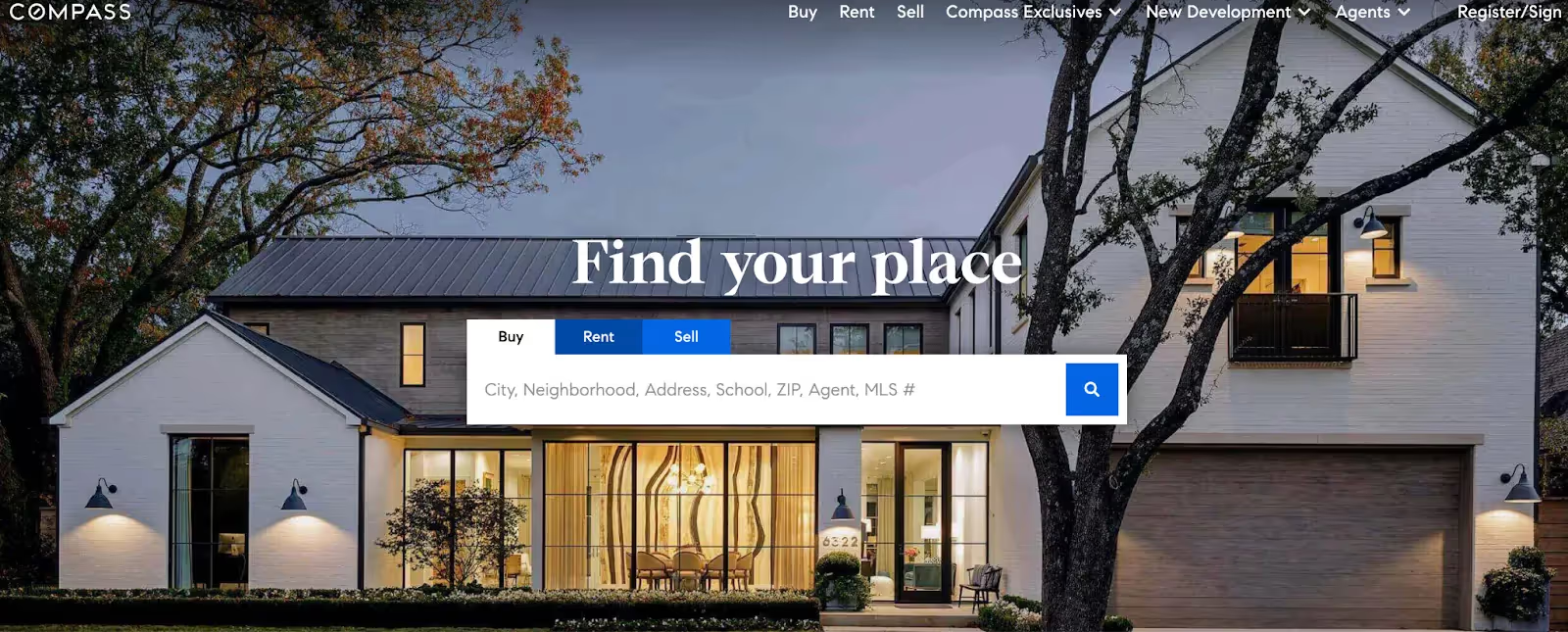
The website of Compass can be discussed as one of the best examples of real estate websites since it is a perfect combination of modern design and strong search and lead capturing.
- The design focuses on property discovery and demonstrates the experience of agents and knowledge of the local market.
- The navigation is also intuitive, and the CTAs like Contact an Agent and Schedule a Tour are located in the areas where visitor intent is the most critical.
The website also has clean listing pages with fewer distractions. It assists users in concentrating on properties with the agent profiles and market data that build trust.
2. Redfin
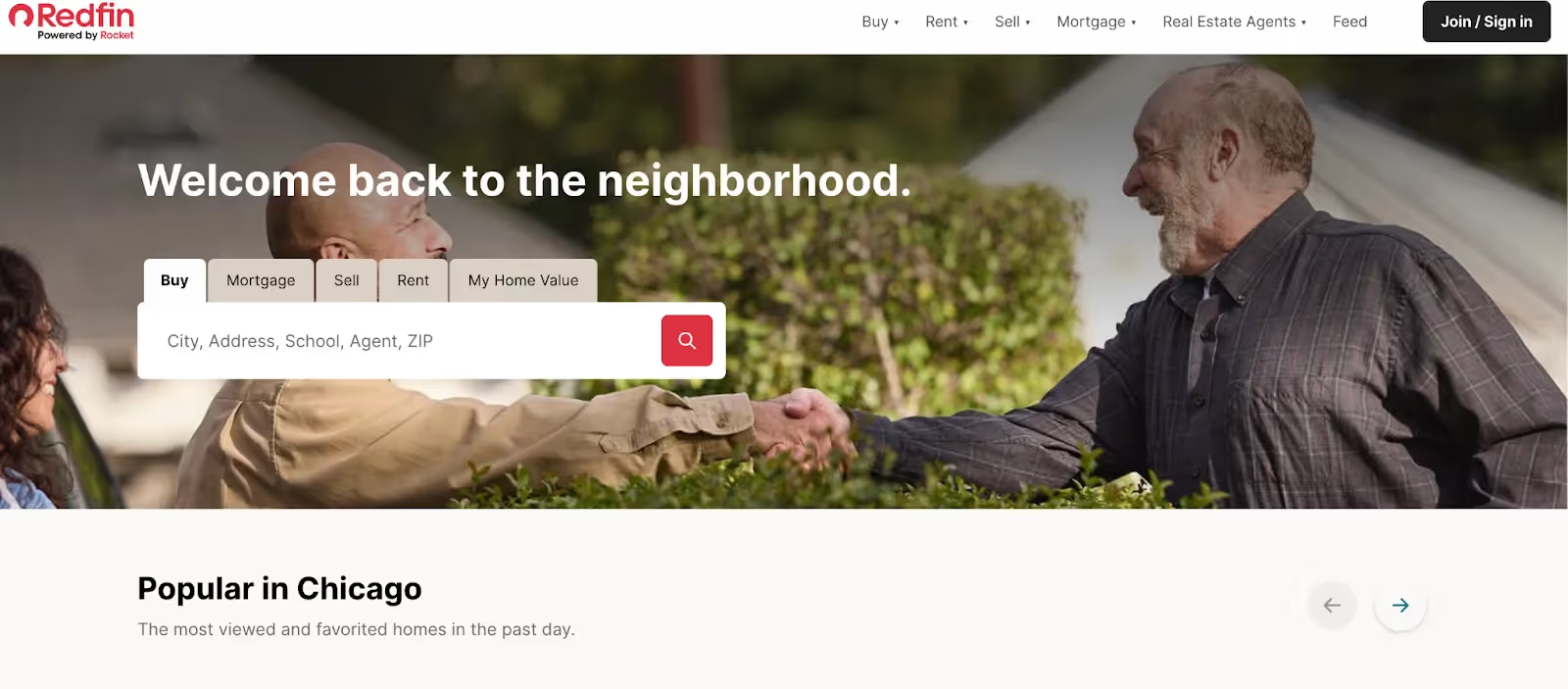
Redfin is one of the real estate websites that is designed as a benchmark with respect to transparency and user experience.
- The site combines practical data, transparent pricing, and map-based search, which enables users to make superior choices.
- The site not only showcases the properties but also develops trust in recent sales, trends in the neighborhood, and the responsiveness of the agents.
By surfacing real-time data and historical insights, Redfin reduces uncertainty and positions itself as a data-backed decision platform rather than just a listings site.
3. Zillow
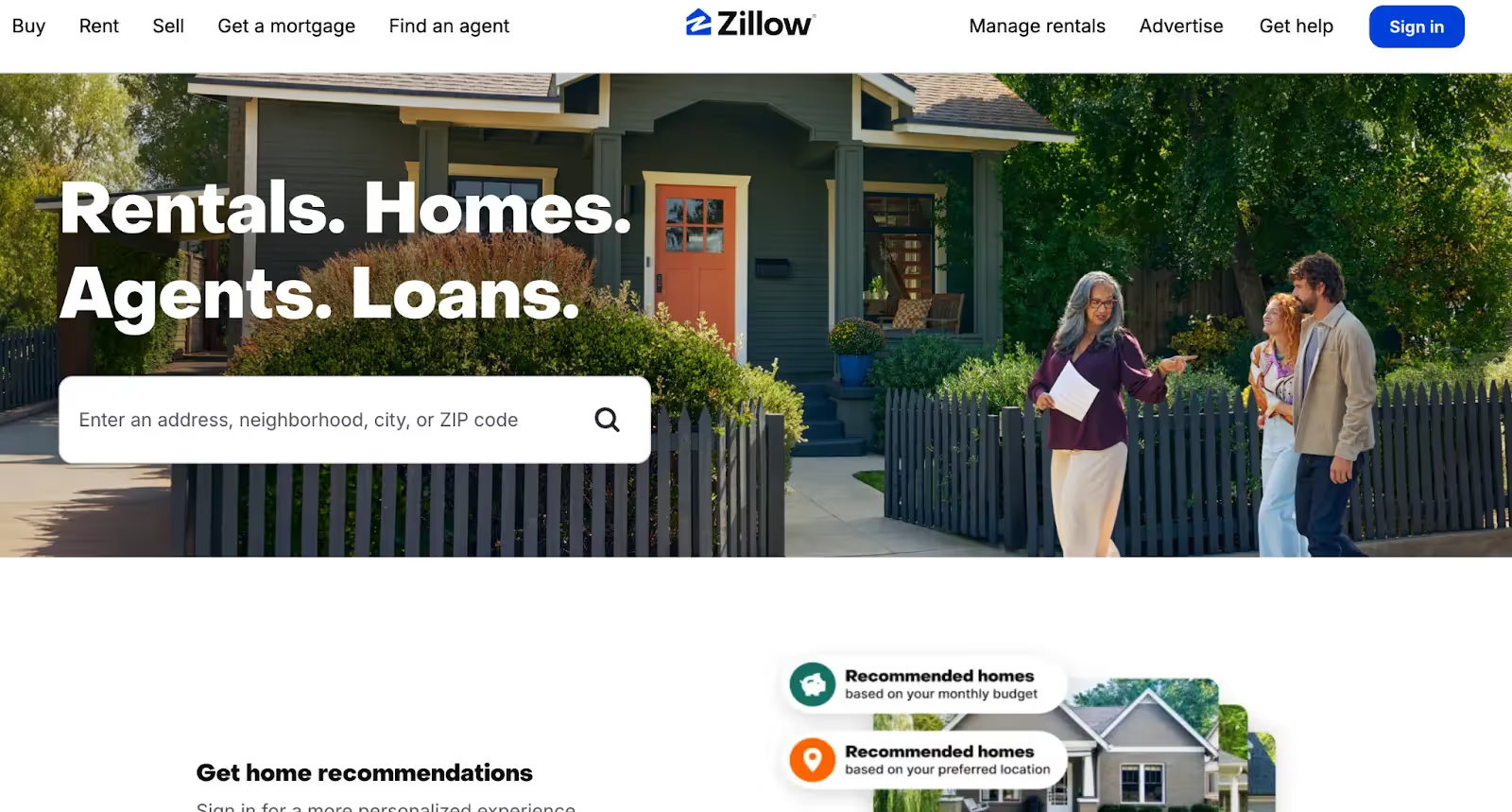
Zillow’s website is an excellent example of a way to help both the buyer and seller with the help of powerful search tools and information about the property.
- It features its filtering system, property snapshots, and request forms.
- It demonstrates how a real estate website can minimize friction and lead visitors on the search to inquiry without getting lost.
The website structure, layout, and content ensure that users can stay longer on the site with saved searches, alerts, and valuation tools that prompt further visits and follow-up.
4. The Agency

The Agency is one of the most appropriate realtor website designs in high-end markets.
- Its visual presentation, sleek designs, and selected property displays enhance the experience without moving conversion points like ‘Schedule a Showing’ and Request Details’ to the background.
- The site supports exclusivity by using cinematic images and elegant typography.
The website ensures maintaining clear inquiry paths that support serious buyer intent.
5. Douglas Elliman

The website of Douglas Elliman is well-balanced in terms of rich media and good content and has clear conversion paths.
- The layout shows luxury homes with high-resolution images, simple navigation, and clear calls to action that can be used to ask questions and contact an agent.
- The profiles of the agents, the market coverage, and the property context are efficiently interconnected.
The website assists the users in relating the listing to the expertise instead of searching in a vacuum.
Real Estate Website Design Templates to Get Started
Building a website is crucial when starting a real estate business. To simplify this process, here we have provided a list of the top 5 real estate website templates that you can take inspiration from.
1. Realtor Website Template

Template Link: Realtor Website
This sample realtor website template has a clean, conversion-oriented design meant to bring out personal knowledge, listings, and contact choices. The agent's ‘BlueHaven Realty’ service is concisely mentioned below a value-focused headline. The CTA, ‘Discover Your Dream Home’, encourages the visitor to visit more beyond the homepage.
2. Property Listing Website Template
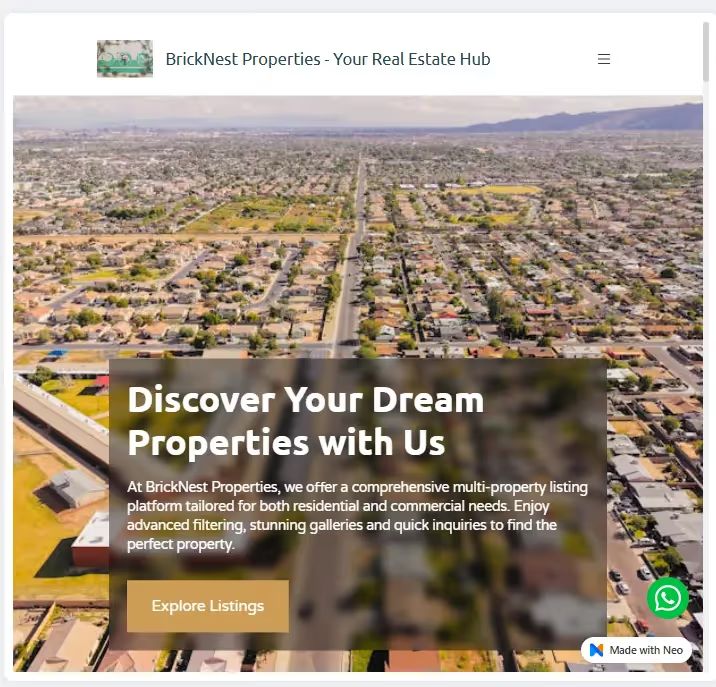
Template Link: Property Listing Website
The template reflects a powerful website design that motivates visitor to look for their dream properties on the website. The engaging description below the heading focuses on the different types of property services that the website deals with. It also cleverly mentions the advanced features like filters and quick inquiries, which the users can take benefit from. The direct CTA, ‘Explore Listings, ’ guides visitors to jump to the listing section without any navigation.
3. Local Real Estate Website Template

Template Link: Local Real Estate Website
The sample template shows a local real estate website, ‘Maple Street Homes’. The template has a powerful heading that allows visitors to relate to the website as a local partner. The short description provides an efficient overview of how the platform offers services, i.e, by performing in-depth neighbourhood insights, understanding local market trends, etc. Plus, the CTA, ‘Discover Your Dream Home,’ helps visitors visualize their dream property and look beyond the homepage.
4. Brokerage Website Template
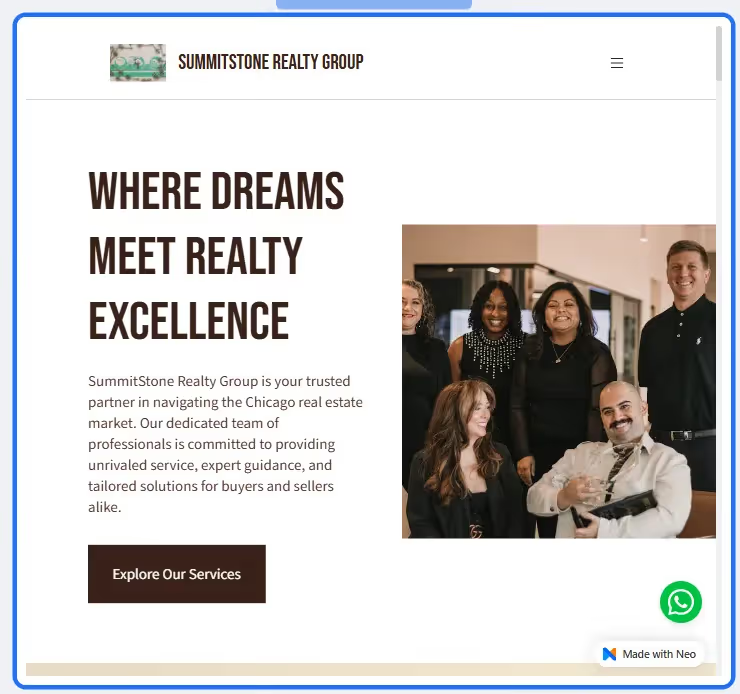
Template Link: Brokerage Website
A brokerage website is built to support team profiles, shared listings, and brand consistency. The sample template is a good example of what the homepage of a brokerage website should look like. It has a value-focused heading, with a summarized description highlighting the location, experience and the type of services for both buyers and sellers. A meaningful CTA is positioned prominently to navigate visitors directly to their services page.
5. Luxury Real Estate Website Template
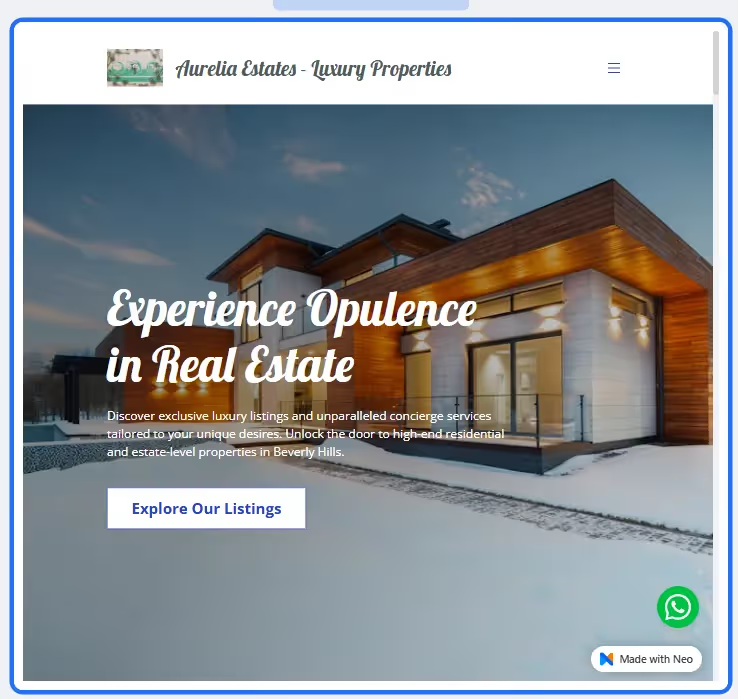
Template Link: Luxury Real Estate Website
A luxury real estate website should have stunning visuals, storytelling, and premium positioning while maintaining usability.
The sample website template depicts the usage of high-resolution imagery, refined typography, and edited property presentations, combined with low-key but explicit inquiry directions navigating to the listings sections.
Things to Remember When Creating Real Estate Websites
Real estate websites must reduce hesitation and speed up decisions for buyers and sellers who are already comparing multiple options.
- Design listing cards for comparison, not beauty: Every listing preview must reveal price, location, most important specifications, and availability without a click. In case users have to open several listings to compare basics, the site adds friction and drop-offs.
- Anchor trust to geography, not branding alone: Prominently show neighborhoods served, recent transactions in those areas, and local market stats. Buyers and sellers trust location familiarity more than generic brand claims.
- Use sold data as proof, not just testimonials: Show recently sold, days on market, or price vs asking on the agent profiles and service pages. Expertise is justified by the results of transactions better than the quotes.
- Design mobile flows around one-hand usage: Make sure that galleries, CTAs, and inquiry buttons are not required to be zoomed or horizontally scrolled to access them. Many property searches happen while commuting or visiting neighborhoods.
- Remove navigation that distracts from listings: Avoid bloated menus. Primary navigation should revolve around buy, sell, rent, listings, and contact. Anything else dilutes focus during high-intent sessions.
Tips to Drive More Traffic and Increase Conversion Rates
Traffic and conversions improve when real estate websites align tightly with search intent and decision moments. Here are practical tips to attract high-intent visitors and turn more of them into qualified leads and real conversions:
- Create location-intent pages, not generic service pages: Create individual pages that are dedicated to certain cities, neighborhoods, or even types of property as opposed to the single large page titled Listings. This is because intent is similar, and these pages rank higher and convert better.
- Place CTAs immediately after listing context: Add “Schedule a Tour,” “Request Price,” or “Talk to an Agent” directly below property details. Do not force users to scroll or navigate away after interest peaks.
- Attach testimonials to actions, not sections: Put the seller testimonials and buyer testimonials next to the valuation forms and viewing requests, respectively. Proof should appear exactly where doubt occurs.
- Treat page speed as a trust signal: Delayed loading of listing pictures or maps lowers credibility immediately. Aggressive compressing of the media and loading of secondary assets should only be done when the primary content is visible.
- Shorten forms but qualify intent intelligently: Ask one high-signal question, such as ‘Buying timeline’ or ‘Property type interest’, rather than asking the customer too much personal information at the beginning. This enhances the quality of leads without damaging conversion.
Build an AI-Smart Real Estate Website Using Neo Sites
Your real estate website is the first step to open doors to a dream home or property for many people. Thus, designing a real estate website that outlines your services while addressing the requirements of your prospective customers is crucial.
Neo Sites understands this and allows teams to design stunning websites, whether a luxury, brokerage, or a property listing real estate site, quickly without any complexities.
Here’s how you can use Neo Sites to build your real estate website:
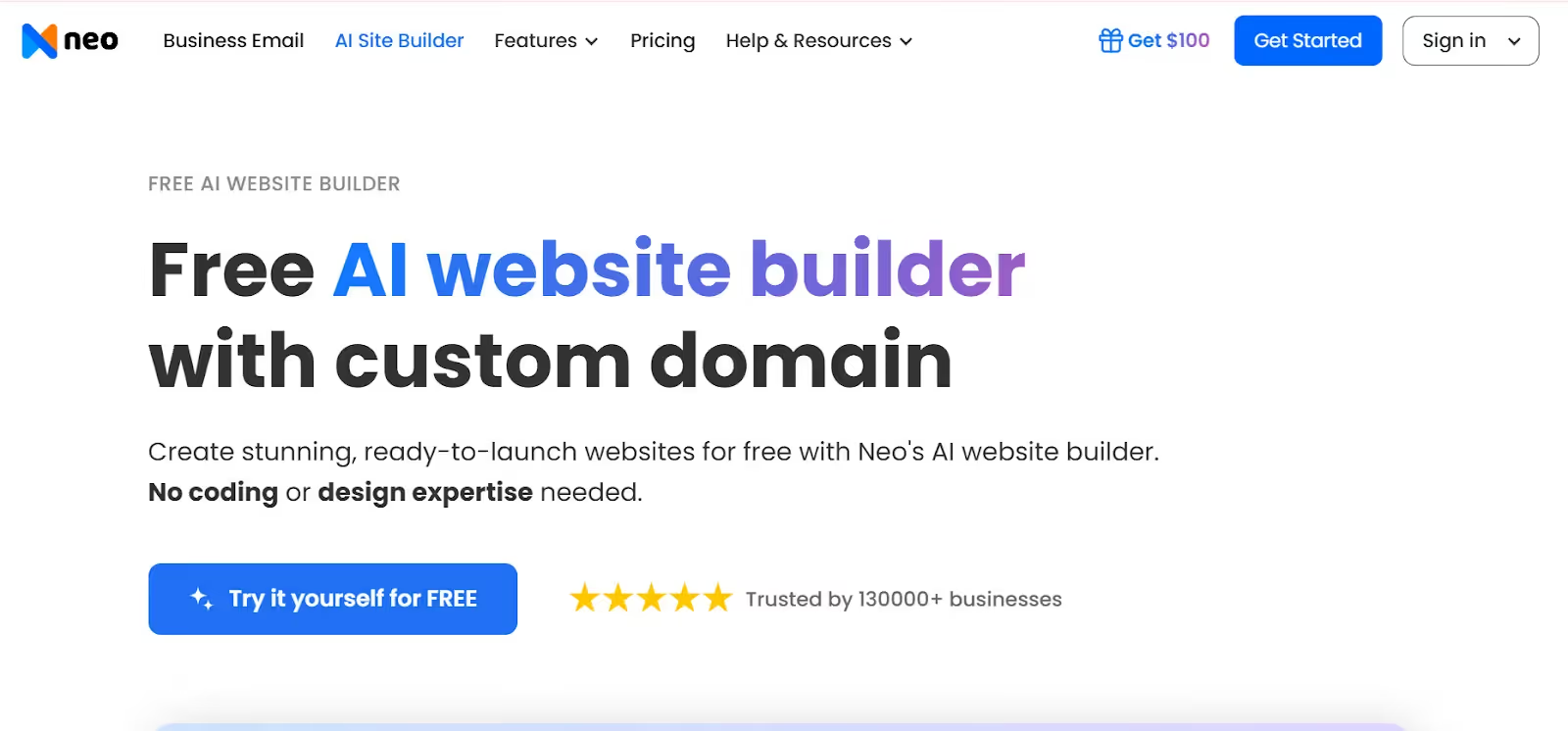
1. Visit the Neo Sites, and click on ‘Try it yourself for free’.
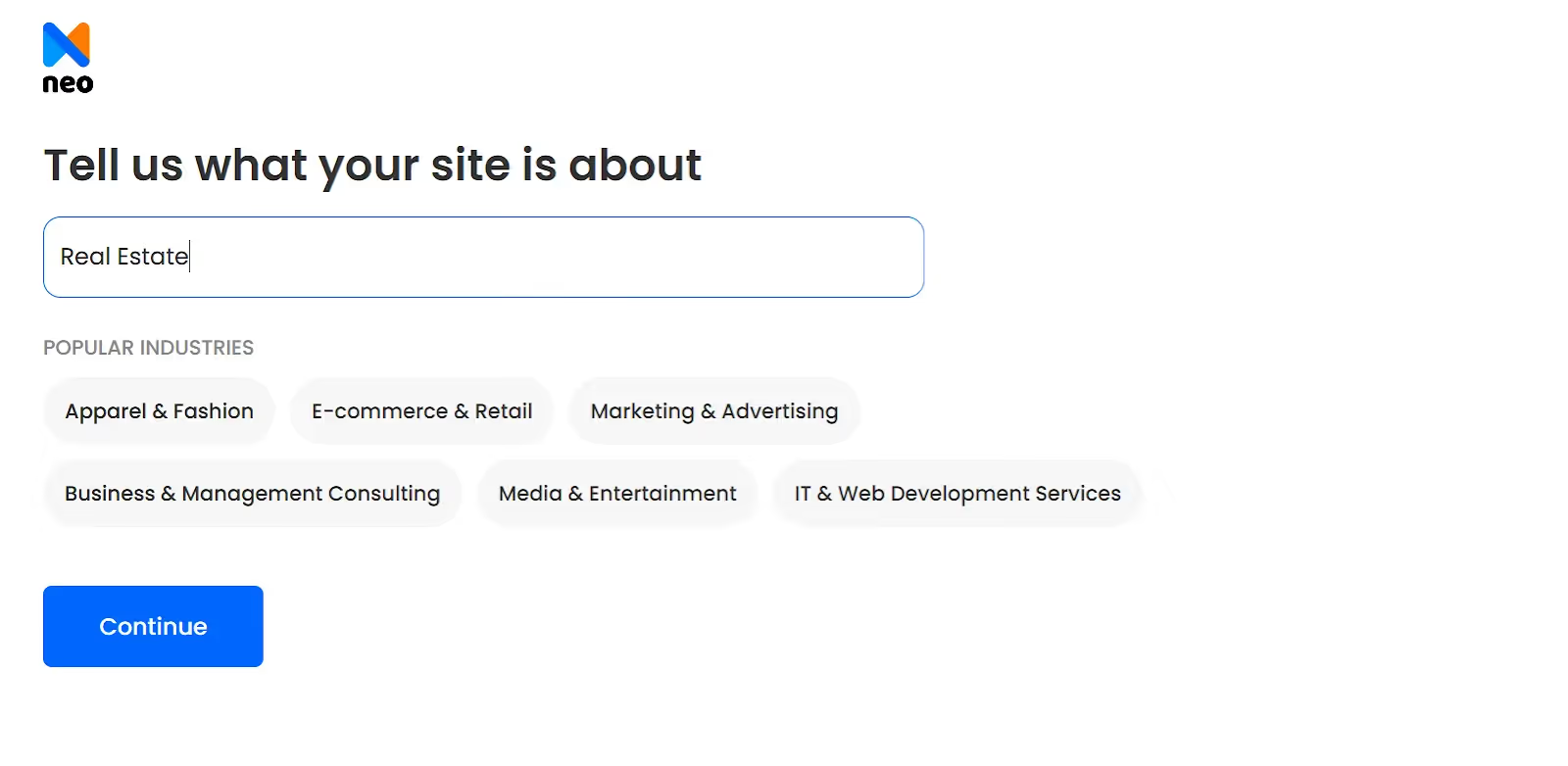
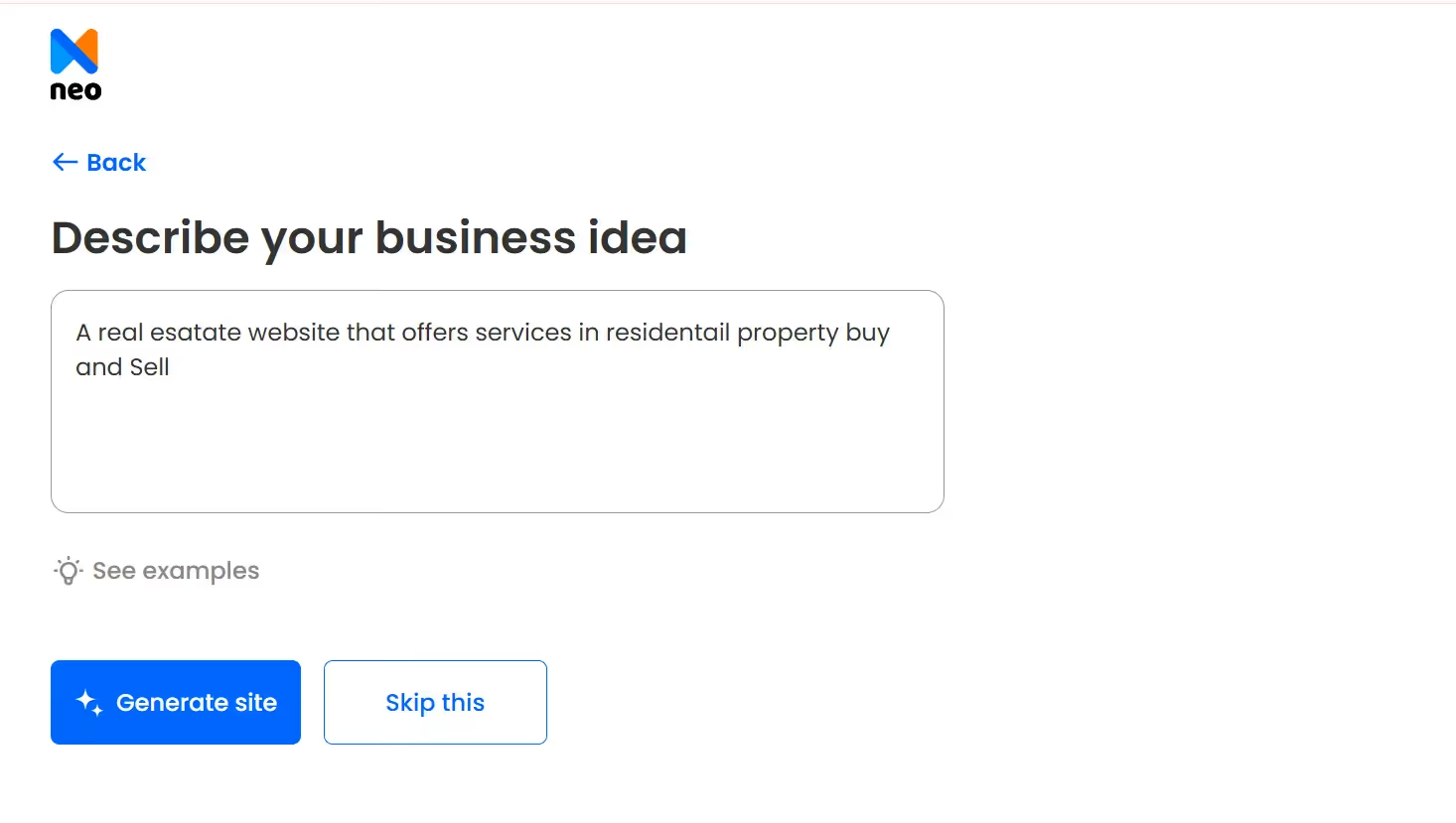
2. Next, you will be asked to tell about your website. Select the most relevant category from the list. Then click ‘Continue’.
3. Describe for your website and click on ‘Generate Site’.
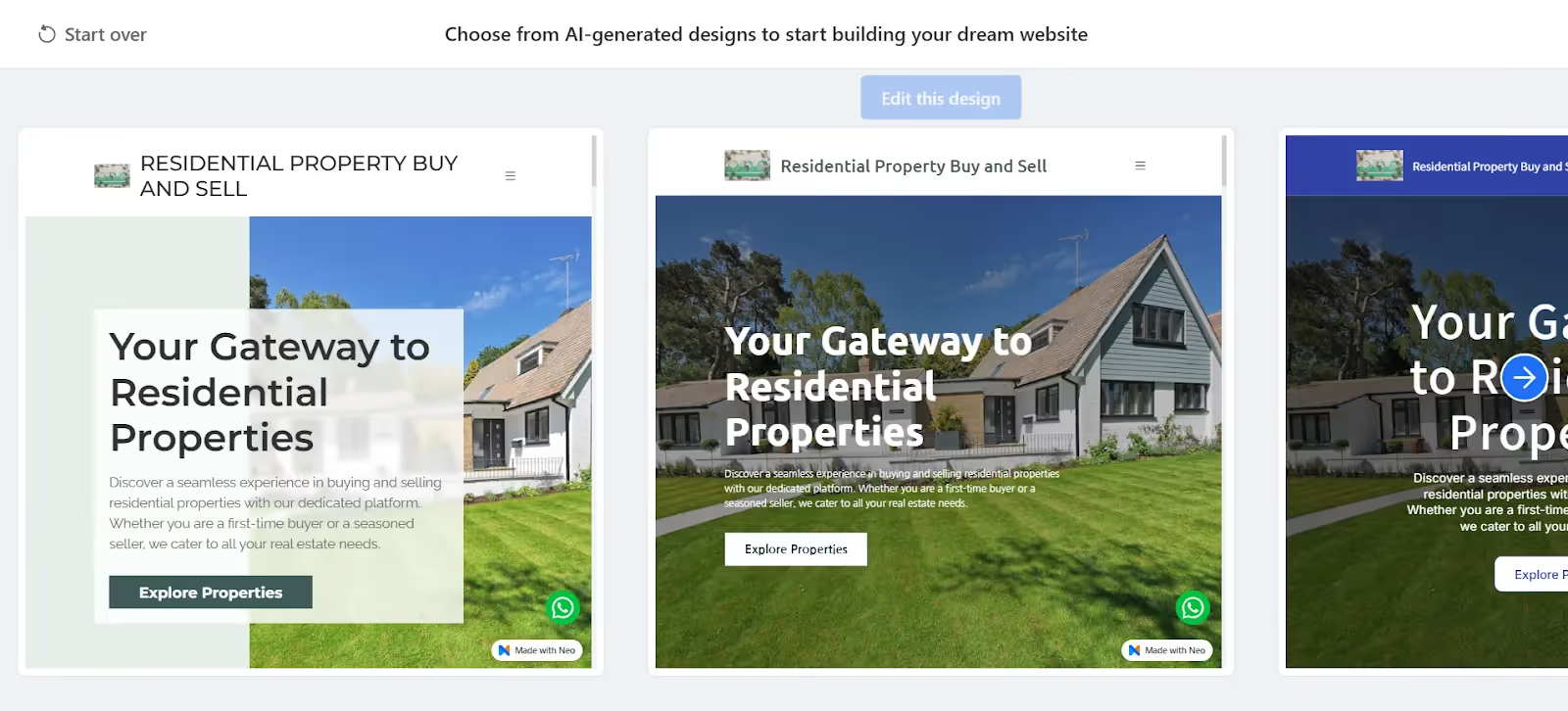
4. Neo Sites will create different website options according to your description. You can select the design which you find the most appropriate. And click on ‘Edit this design’.
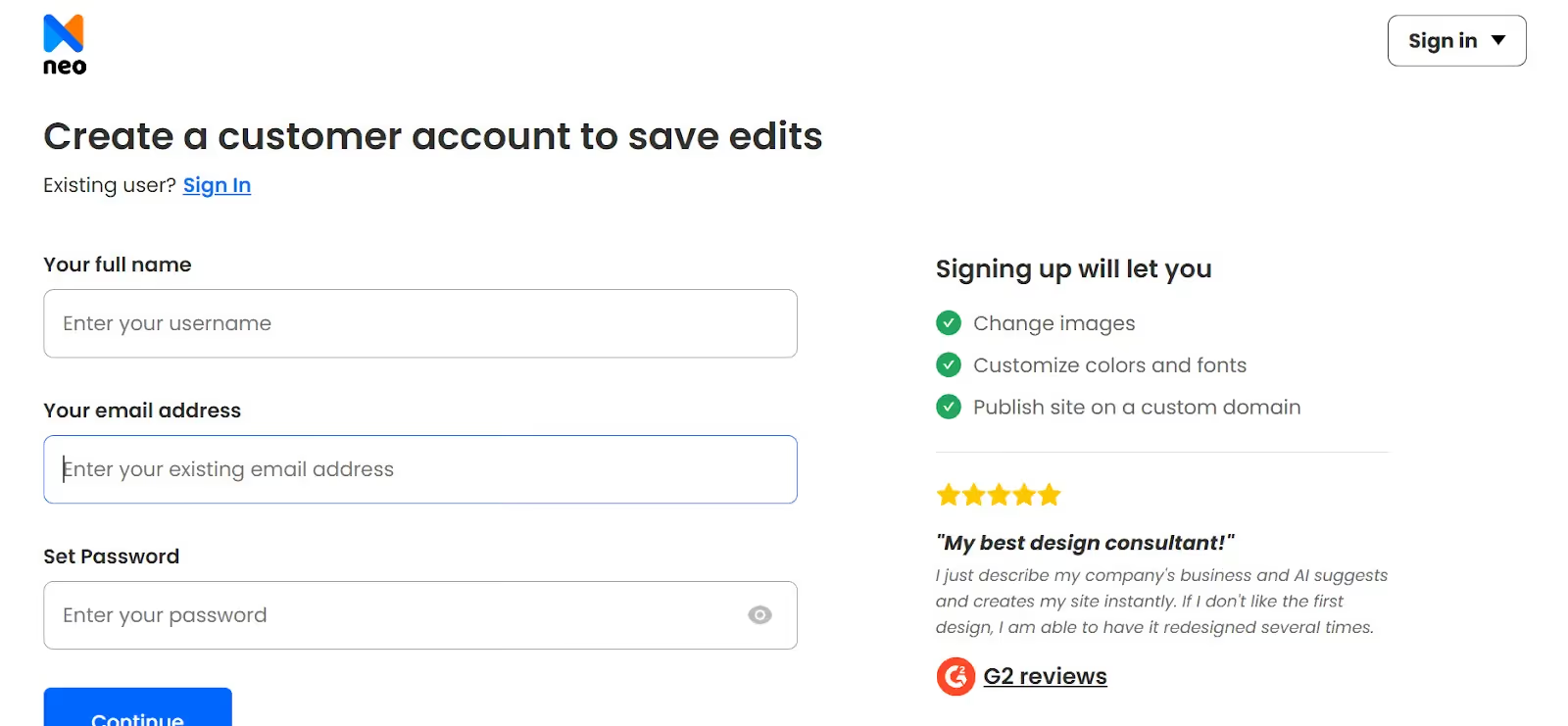
5. But before you edit the design, Neo Sites will ask you to create a customer account. Enter all the required information and create the account.
Once done, you will be able to edit the design using the drag-and-drop editor. You can also make use of the AI content generator to build engaging content that can be added to your website, or transform the existing headline, calls to action, and page sections to transform your website into a lead-generation website.
The Bottom Line
Credibility, lead generation, and long-term growth are necessities that are achieved by real estate websites. Modern website builders such as Neo Sites enable realtors and brokerages to build conversion-focused websites that are professional without any technical obstacles. With effective design, local search engine optimization, and direct message, real estate websites can be reliable sources of qualified leads.
FAQs
- What is the importance of a real estate website to the agents and brokerages?
A real estate website assists agents and brokerages to build trust, market listings, and receive buyer and seller requests in a single-owned site, rather than relying solely on third-party listing portals.
2. What should a well-designed real estate website include?
A good real estate website should consist of agent or brokerage positioning, property listing, trust indicators like testimonials or sold properties, and convenient contact or booking features.
3. Can a real estate website help generate qualified leads?
Yes. When properly structured, real estate websites can lead visitors to take the steps of booking viewings, asking valuations, or calling agents, as well as translate interest into qualified leads.
4. How important is mobile optimization for real estate websites?
Mobile optimization is critical, as many buyers and sellers browse listings on the go. A mobile-friendly design ensures listings, images, and inquiry forms are easy to view and use on smaller screens.
5. How often should a real estate website be updated?
Websites of real estate agencies must be updated on a regular basis with new listings, market knowledge, testimonials, and information about the agent to keep them up to date, reliable, and pertinent to potential clients.
Get Business Email
No domain name required
Capture Leads with a Website
Build with Neo Sites
