



.svg)
.svg)
.svg%201.svg)



Get Business Email
No domain name required
Get your Small Business Online
with Neo Sites

A website for a small business plays an important role in boosting its sales. A small business website clearly communicates your value, builds trust with first-time visitors, and converts interest into real customers before you even speak to them. It is one of the key business assets that has a direct impact on credibility, discoverability, and revenue.
The more customers search, compare, and make a decision online, the more small businesses that have clear and well-organized websites have an advantage. A thoughtfully designed small business website helps customers understand what you offer, why it matters, and how to take the next step with confidence.
Discover how good small business website designs can make customers trust your business and turn them into paying clients.
Summary
The online presence of your business is a small business site. It enables customers to learn about your services, know your worth, and engage with your brand at any time. Launching a small business website normally requires a domain name, web hosting, and a web builder.
Small businesses now have the opportunity to build professional websites without contracting developers or agencies, with modern AI-powered or no-code website builders. It is easier to develop, start, and maintain a site that promotes growth using these tools.
Here’s how you can make your small business website inspirational and conversion-friendly:
- Develop a clear home page message that gives an explanation of what you do and whom you serve.
- Showcase services or products that have easy descriptions and results.
- Create trust by using testimonials, reviews, or actual customer results.
- Include obvious calls to action, for example, Get a Quote, Book a Call, or Contact Us.
- Make sure that the site is compatible with mobile and desktop interfaces.
If you are looking for platforms that offer domain registration, hosting, and website building in one place with customizable themes, you can consider Neo Sites.
What is a Small Business Website?
A small business website is a simple, professional website created to represent a small business online. It serves as a hub where prospective buyers get to know what you are offering, how you work, and how to reach out to you.
An average small business website has:
- A clear value proposition
- A summary of products or services
- Business experience and reputation indicators
- Case studies or customer testimonials
- Contact or inquiry form
In contrast to social media profiles, a small business site is entirely owned by you and created to help grow your business over the long run rather than for short-term visibility.
How Can a Small Business Website Be Used?
Small business websites have diverse functions based on business objectives, industry, and level of development. Here is how a small business website can be used to support different business goals, customer journeys, and stages of growth:
1. Lead Generation Website
A significant number of small businesses that deal with services rely on their websites as lead generation engines, and not information pages. These websites direct visitors toward a specific action, such as sending an inquiry, booking a call, or requesting a quote. The message is simple and result-driven, and it allows the visitors to know what the business has to offer and the suitability of the business to their needs within a short time.
A strong lead generation site is one that aims to eliminate uncertainty. Explanations of the services are clear, benefits are visible, testimonials, certifications, and case studies all contribute to generating trust. While creating a website with lead capture forms, ensure calls to action are placed properly where they are highly visible, and the contact form is easy to fill out with fewer fields.
Read More: How to generate leads using lead generation website?
2. Product or eCommerce Website
Websites are used to display products, communicate value, and facilitate transactions by small businesses that sell products. These sites are informative on what the product is, who it is targeting, and why it is worth purchasing, as the process of purchasing is easy and transparent.
Effective product sites are based on neat designs, good graphics, reasonable pricing, and sincere information. Additional information like shipping details, return policies, and customer reviews is supportive and makes the customers feel secure. Even the small product catalogs can be effectively organized and have a checkout process that would reduce the number of drop-offs.
Read More: 5 effective ways to build an eCommerce website
3. Local Business Website
Local business websites are designed to support quick decision-making for nearby customers. They provide clear information on the fundamental information like location, service area, working hours, and contact details, which enable users to be assured of trust before visiting or calling.
Such sites usually have maps, local testimonials, and descriptions of the services based on the local community. To most customers, the local business site serves as an authentication process, which promotes legitimacy and reliability prior to interaction.
4. Brand Story and Authority Platform
Some small businesses use their websites to go beyond services and pricing by communicating their story, values, and expertise. Brand-driven websites show how the business thinks and works through blogs, case studies, insights, or the founder's views. This creates a sense of authority in the long run and distinguishes the brand from others. It also brings in customers who share its philosophy and style.
5. Portfolio or Work Showcase
Creative and professional small businesses often use portfolio-style websites to showcase real work and client outcomes. Such websites give context to selected projects, clarifying the problem, approach, and results rather than showing individual samples.
Portfolio websites can assist potential clients to evaluate quality, style, and fit by demonstrating how work is done and why it is important before they make contact. This method selects queries and draws leads who already have the knowledge of what the business can do and what is expected.
See More: 20 Architect portfolio examples and website templates
Top 5 Small Business Website Examples
The following small business website examples demonstrate how thoughtful design and clear messaging drive trust and conversions.
1. Beardbrand
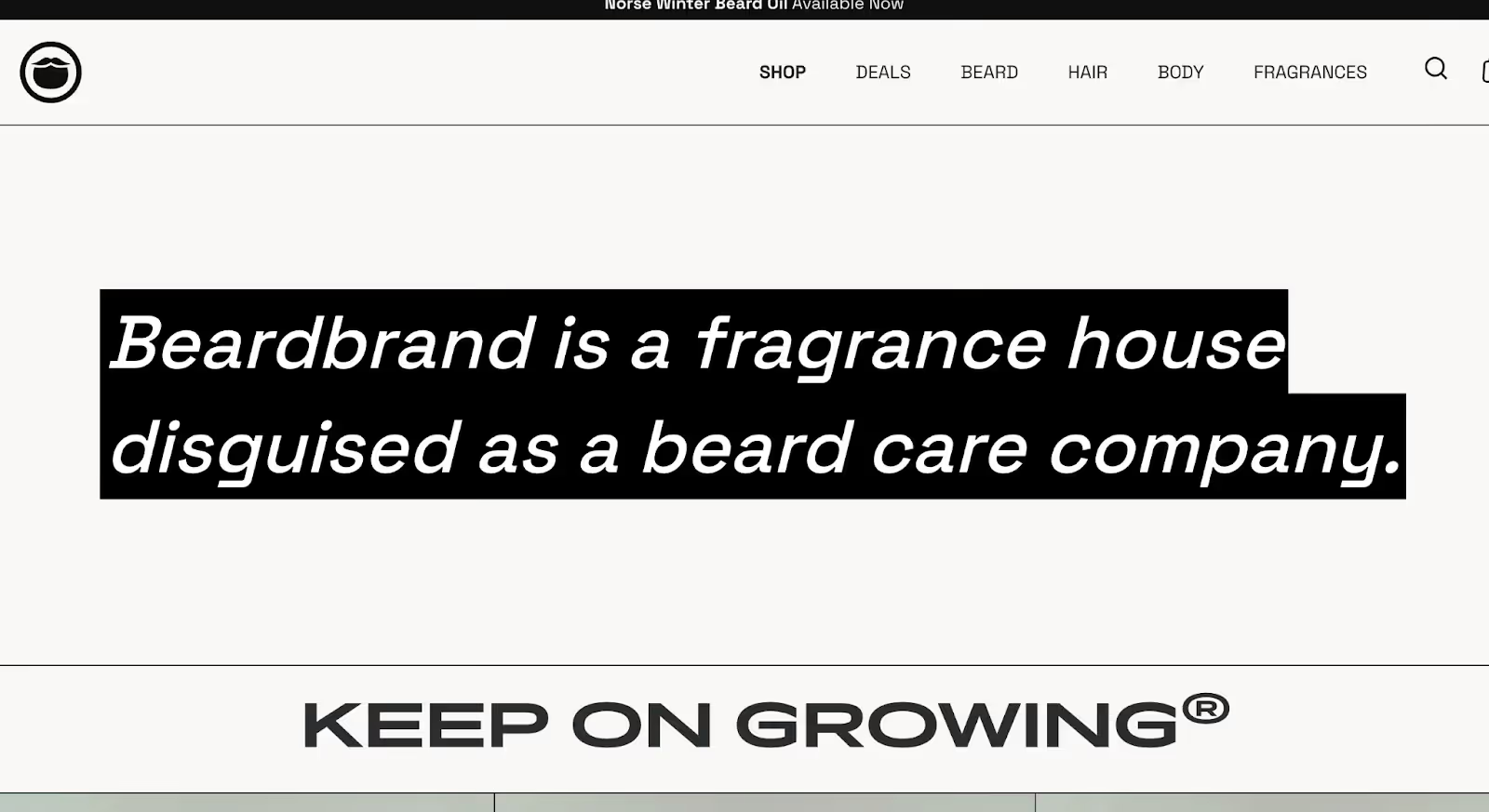
Beardbrand’s website demonstrates how a small business with a niche can create a powerful identity through the combination of storytelling, design, and positioning of the product.
- The site instantly conveys the brand, who it is for, and what it is about, with a tone of confident language and a uniform visual language.
- Rather than aggressively selling products, Beardbrand informs visitors with content, guides, and philosophy-driven messages, which creates trust prior to conversion.
Easy navigation, targeted product pages, and solid brand voice do not present visitors with any obstacles in their way to getting to purchase.
2. Sweetgreen
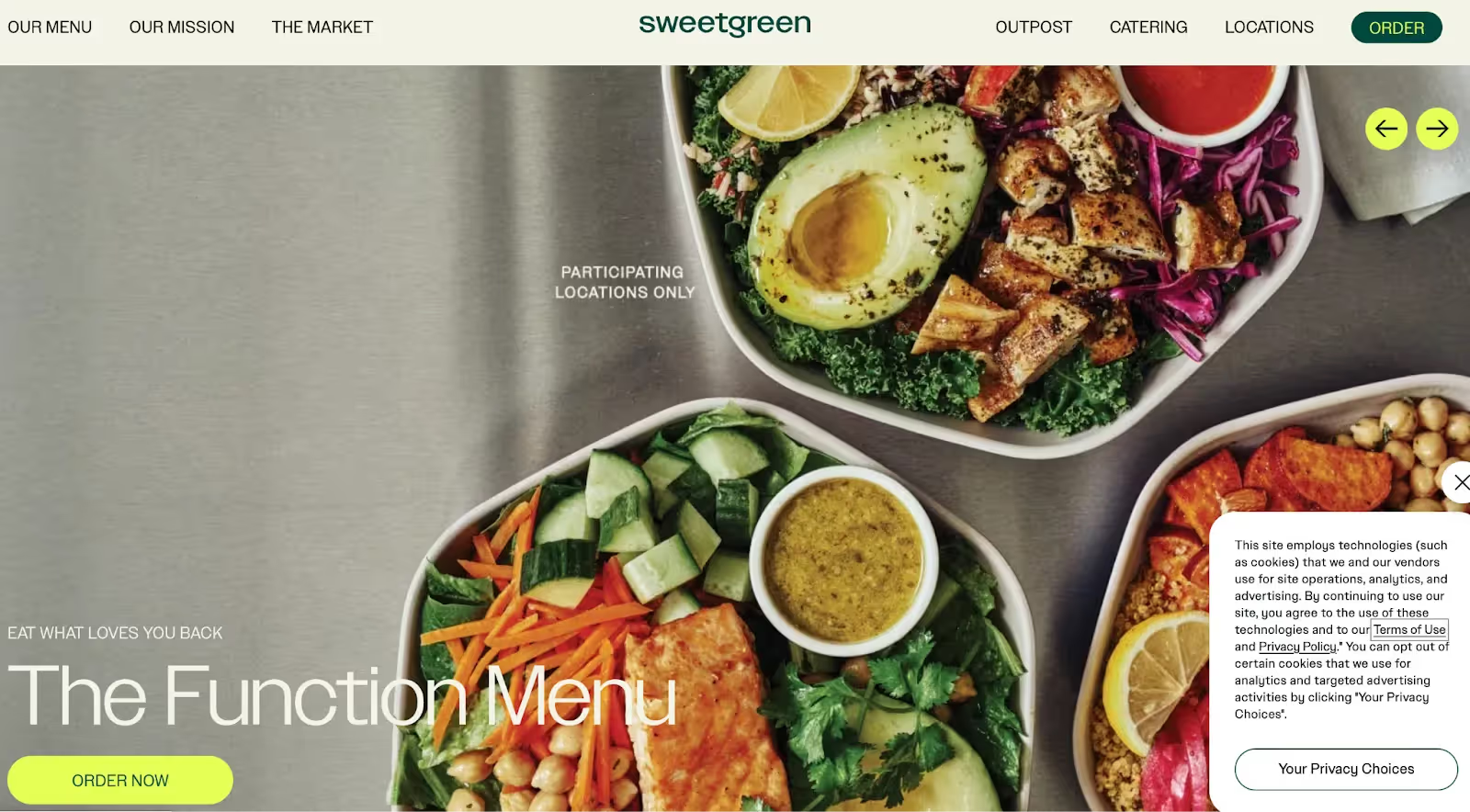
The webpage of Sweetgreen is focused on simplicity, clarity, and transparency, which are also the direct values of the brand.
- The design is focused on convenient access to menus, the source of ingredients, and nutritional data to enable users to make fast and reliable decisions.
- Consistent graphics and uncluttered designs make the cognitive load less, and the navigation is easy to follow, for the first time visitors as well as returning ones.
This strategy renders the site very conversion-friendly without being transactional or overwhelming.
3. Basecamp
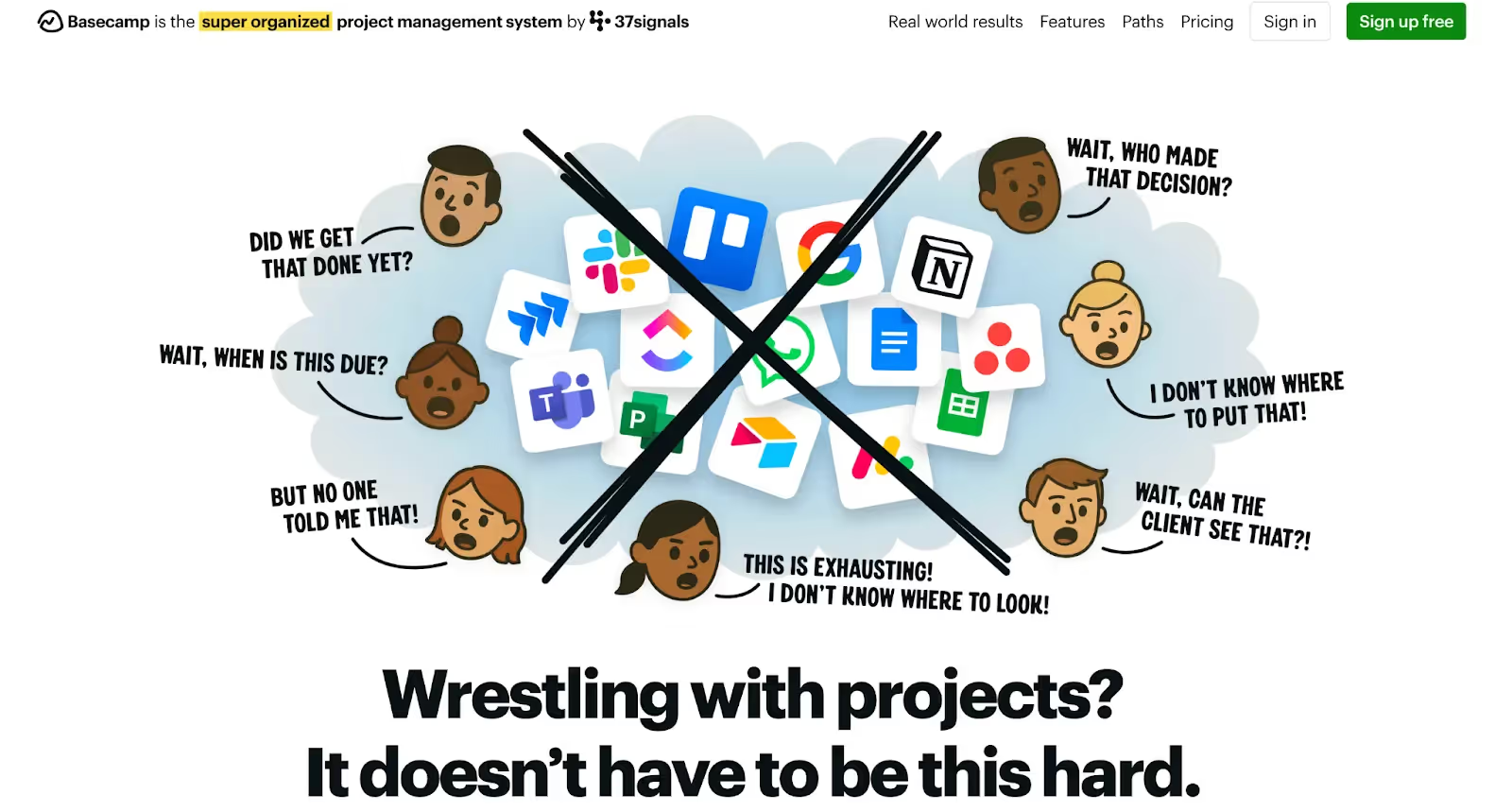
Basecamp’s website is designed in a manner that is user-oriented and not complex, thus making it a good example of a small business website design.
- It describes its product in plain words instead of using technical terms, and visitors can get a clear idea of the value proposition within a short period of time.
- There is a limitation of distractions, and every page has its purpose.
Powerful calls to action lead the users to the trial or further knowledge, which strengthens the confidence instead of coercing the choice.
4. The Sill
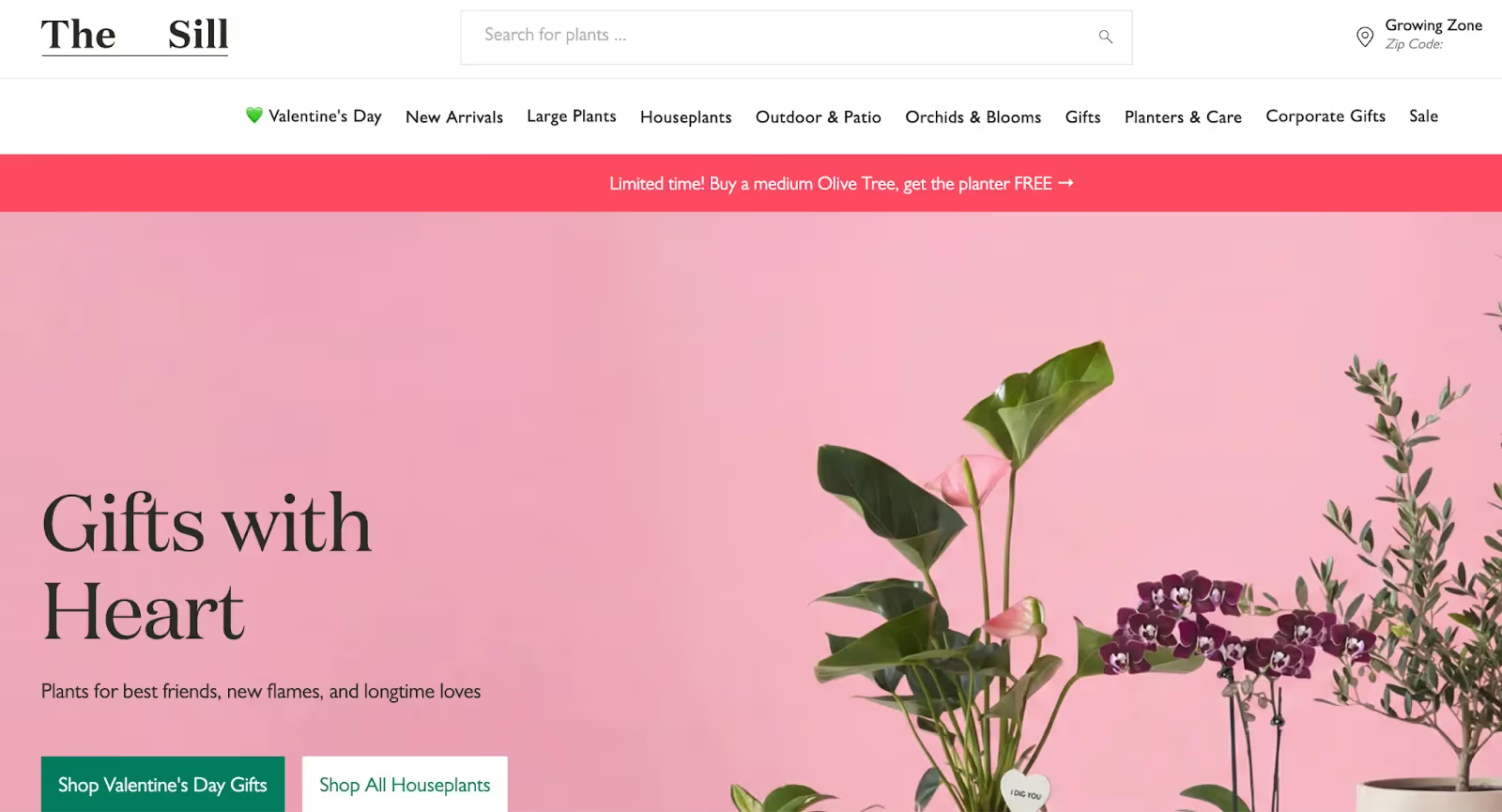
The Sill site is a well-balanced visual and functional site.
- It provides quality images and a peaceful design to develop a friendly browsing experience, and the product categorization is clear to enable users to find what they need within a short time.
- Trust signals include educational content, care guides, and customer reviews that will lower the purchase hesitation.
This mix of narrative and design can easily guide visitors from discovery to checkout.
5. Death Wish Coffee
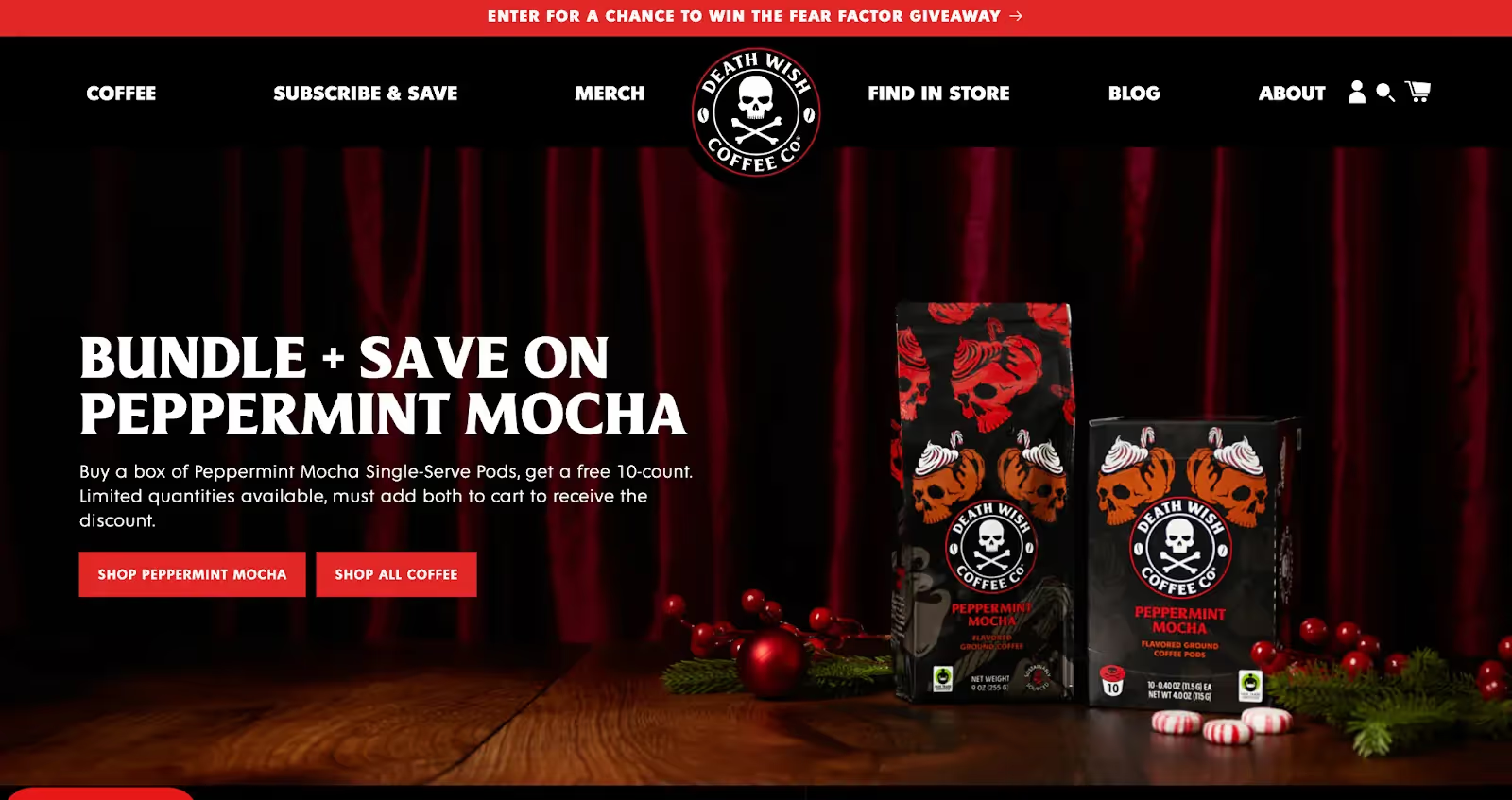
Death Wish Coffee relies on striking imagery and assertive communication to stand out in the saturated market.
- The personality and the unique selling proposition of the brand are well expressed on the homepage of the site.
- The contrast in the text is strong, the copy is assertive, and calls to action are focused, which makes the experience energetic, yet conversion-oriented.
Although the site is well-branded, it has well-defined product routes and buying processes that ensure the site is easy and simple to shop.
Explore More: Examples of Stunning and Creative Small Business Website
How to Create a Small Business Website?
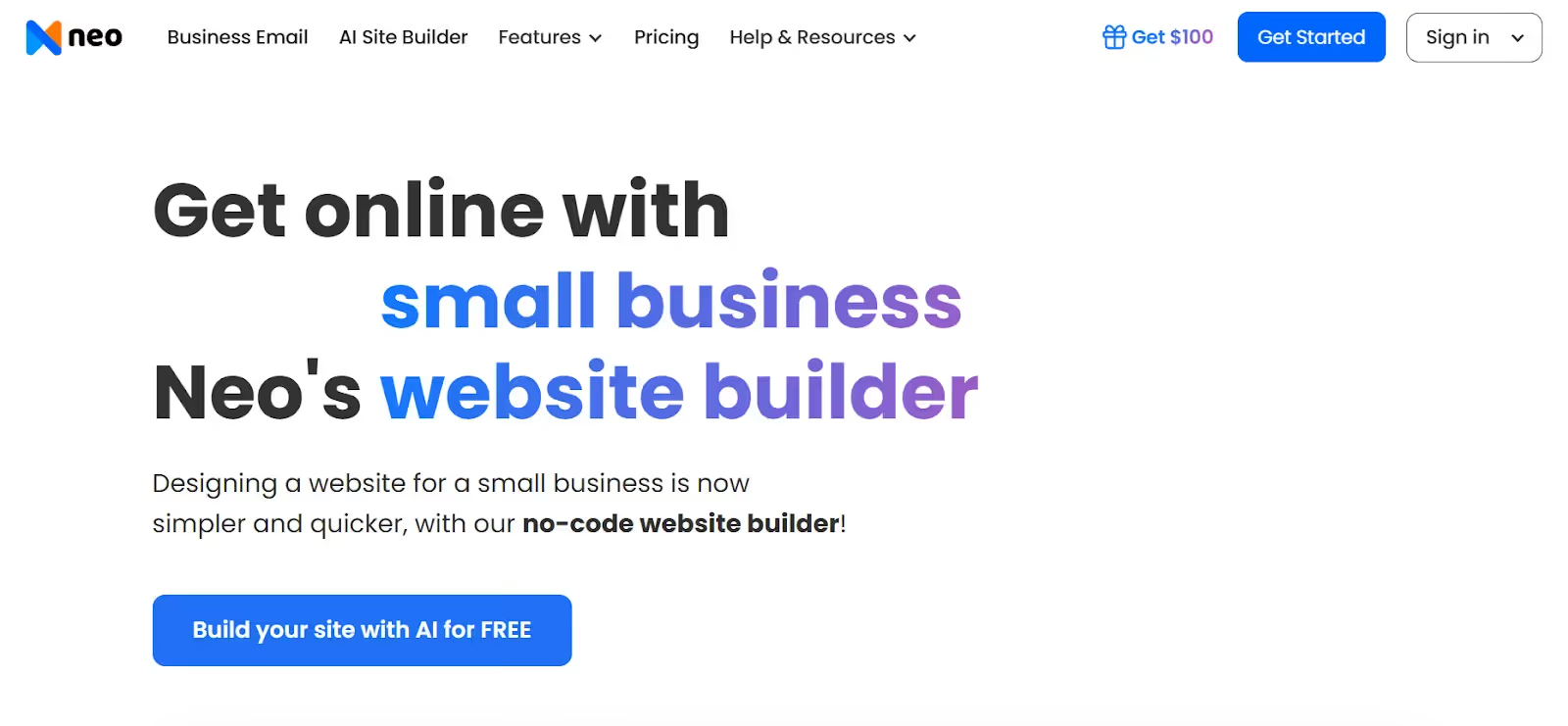
With an AI website builder, building and deploying a website is fast, simple, and doesn’t require any technical skills. For example, you can use Neo Sites to create a website within minutes. Here’s how:
Step 1: Go to Neo Sites and click “Try it yourself for free.”
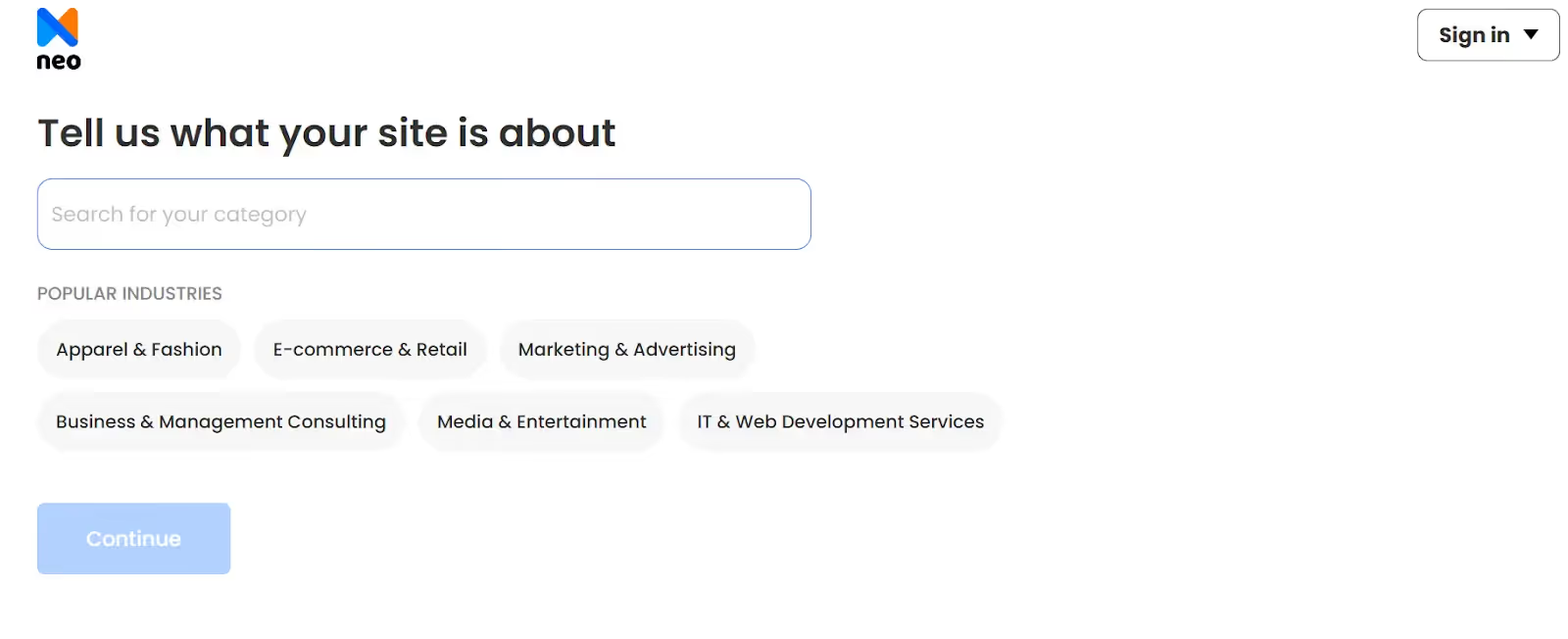
Step 2: Type the name of your business industry, such as SaaS Product, UI/UX, Food and Beverage, and others. Then click ‘Continue’.
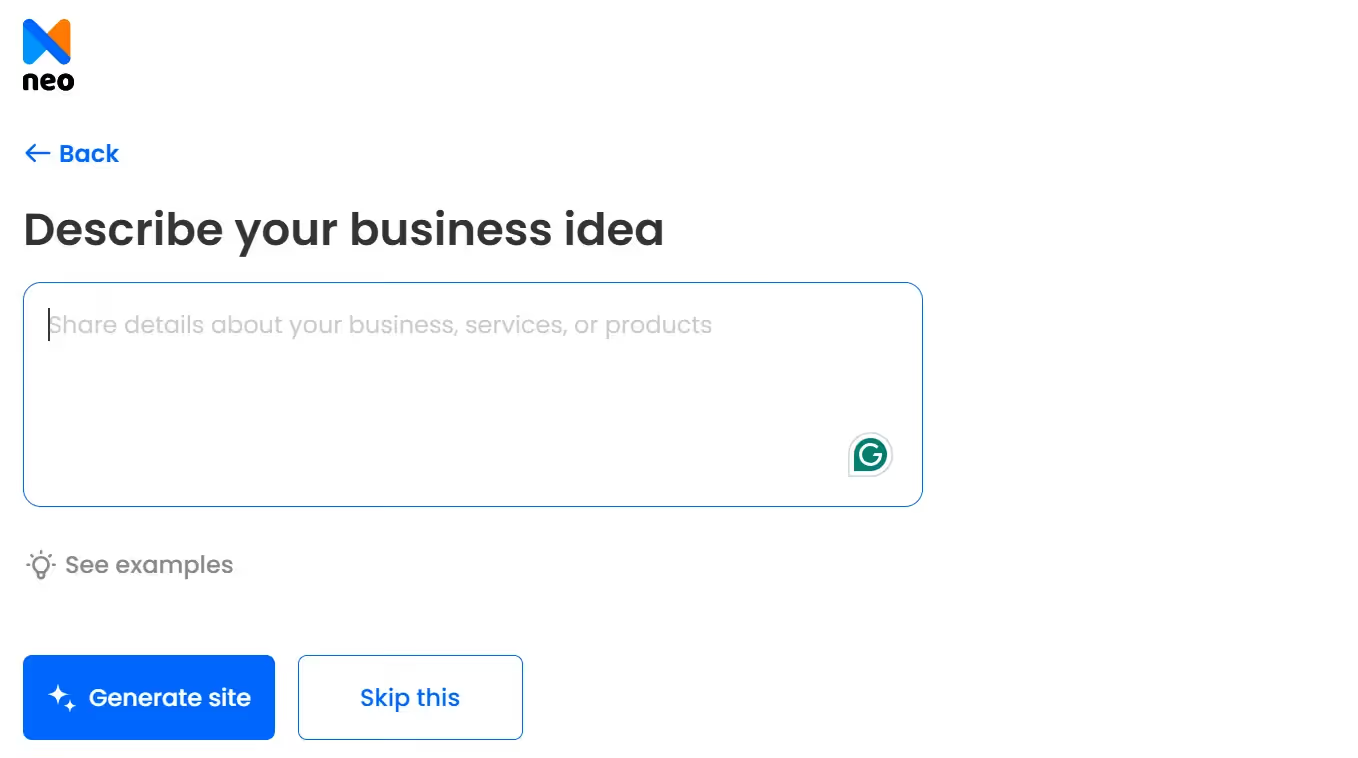
Step 3: Write a prompt which explains your business idea. For example, you can create a website for a clothes business.
Step 4: Within minutes, you will get a complete website template ready, with tailored content and images. Choose one, and click on Edit this Design.
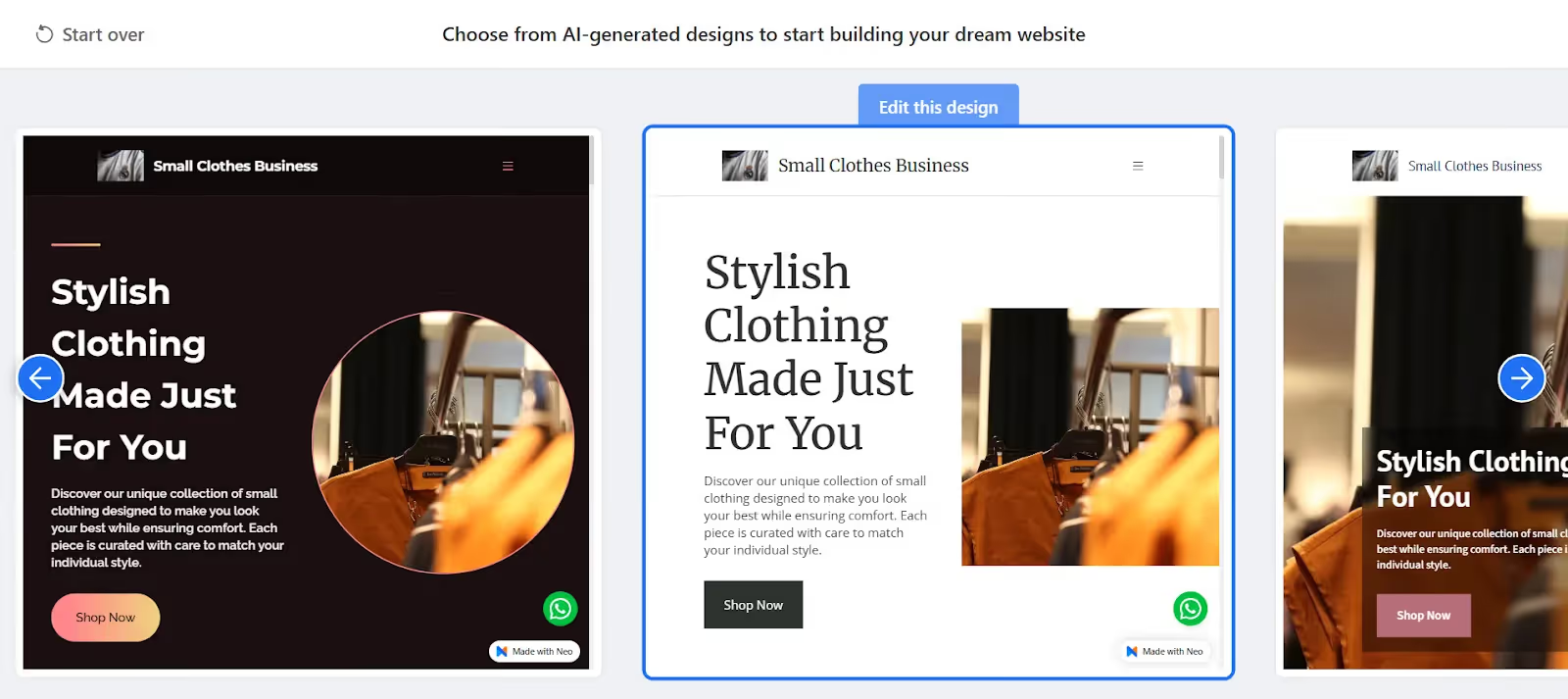
Step 5: Create your customer account with Neo Sites, and continue with registering your domain name to deploy the website.
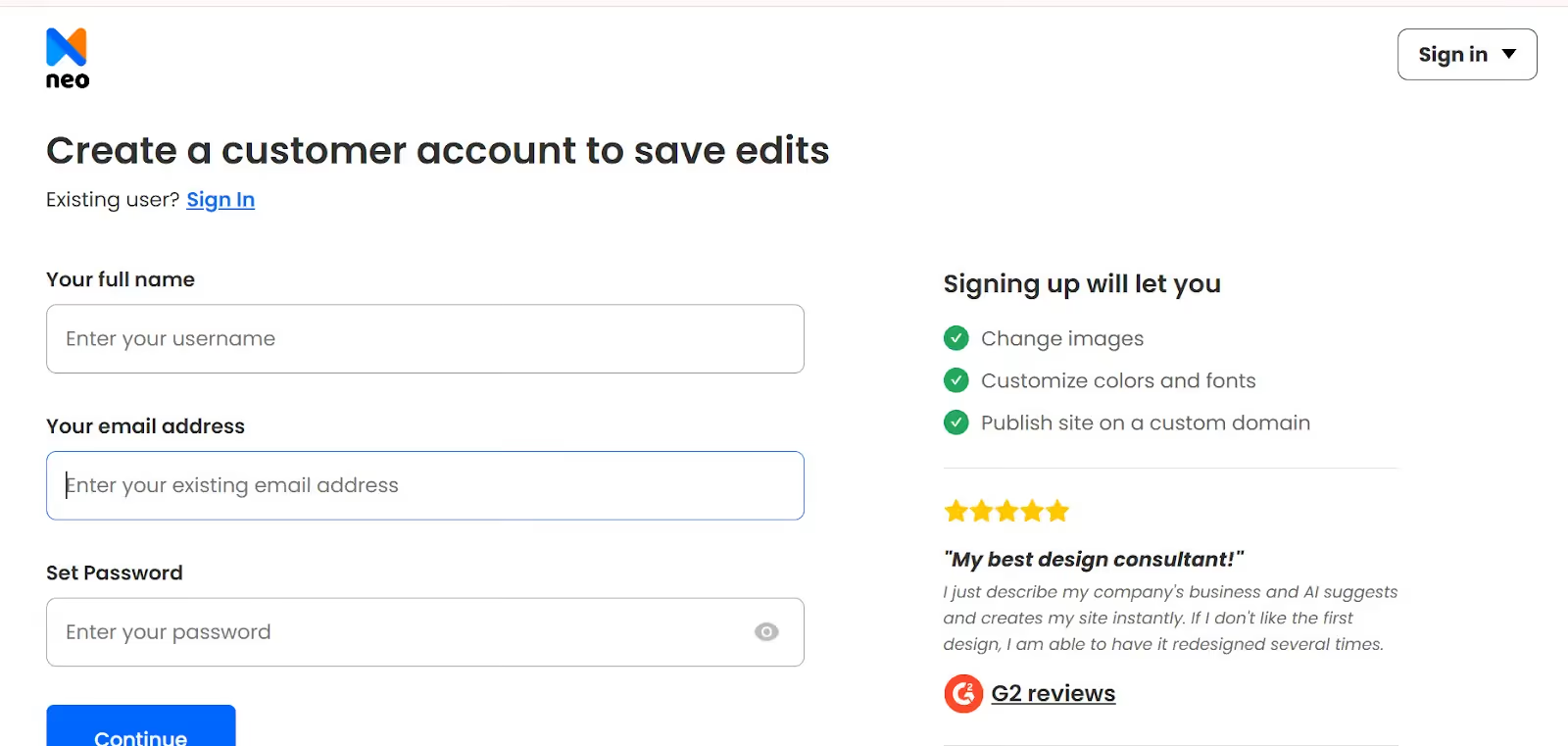
The drag-and-drop editor allows you to personalize the template and edit it. You can use Neo Sites’ AI content generator to create content for the website or generate more ideas for user-engaging headlines and CTAs.
Templates to Get Started With Small Business Website Designs
Here are the website templates created using Neo Sites that you can use to build a simple small business website:
1. Local Service Business Website
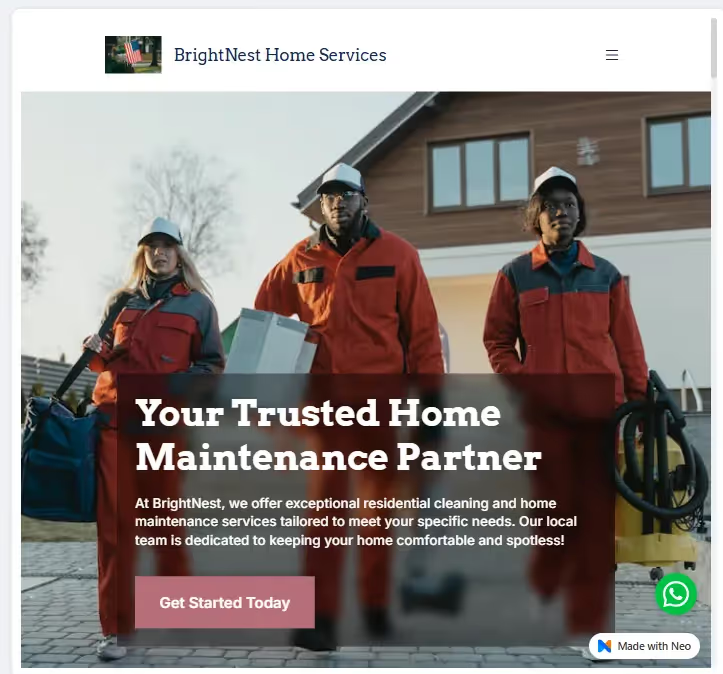
Template Link: Local small cleaning services business
A local service business web page template has the purpose of stating in a clear manner what the business is offering and how it will benefit the customer.
This website template for a small cleaning business highlights a strong hero section with a professional cleaning team image. It also highlights in bold a trust-building headline, displays clear service messaging, and has a prominent call-to-action.
What makes this template effective?
- Clear headline messaging that describes the service offering
- Right and clear placement of the call to action
- Basic navigation aimed at conversion
2. Professional Consultant Website

Template Link: Professional consultancy services for small businesses
For businesses offering professional consultancy services, their website should display clear goals and strategies that they use to offer services.
This template of professional consultancy services for small businesses highlights a bold, value-driven, clear headline. The professional images used in the website shows experiences professionals and concise messaging, and encourage readers to take the next step.
What makes this Template effective?
- The heading clearly communicates expertise.
- The template has a clean layout and sufficient spacing to allow readers to focus on the messaging clearly.
- The CTA is positioned at the right place using the right corporate colors and minimal distractions.
3. Creative Portfolio Business Website
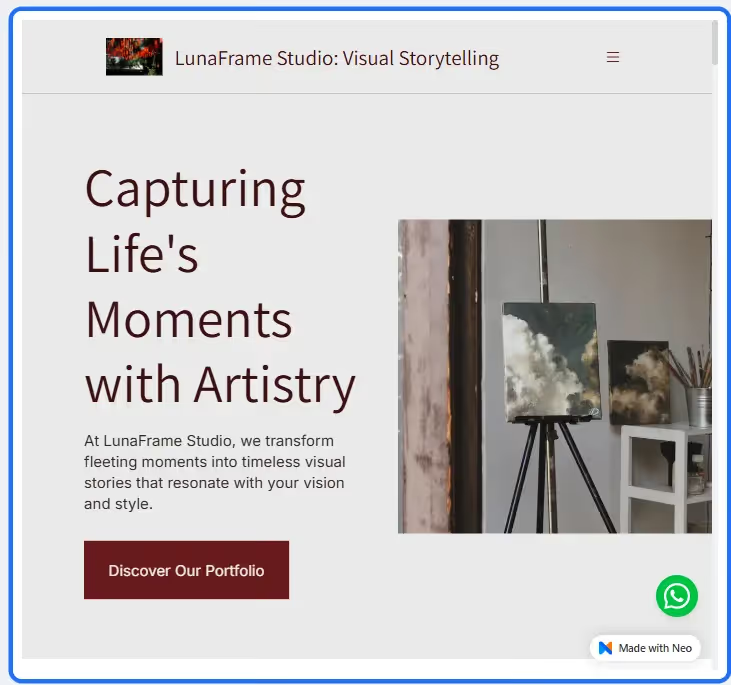
Template Link: Creative portfolio business template
A portfolio-based web template is designed to present work in a contextual and organized way rather than as isolated samples. It assists the visitors in knowing the quality, method, and effect of previous projects.
This template reflects the creative identity of the small portfolio business. The subtle colors and typography-led layout create an immersive storytelling experience.
What makes this template effective?
- It creates an art-led first impression.
- A restrained design, with clean spacing and a distraction-free layout.
- A short narrative content with a prominent and meaningful CTA, ‘Discover Our Portfolio’.
4. Food and Beverage Small Business Website
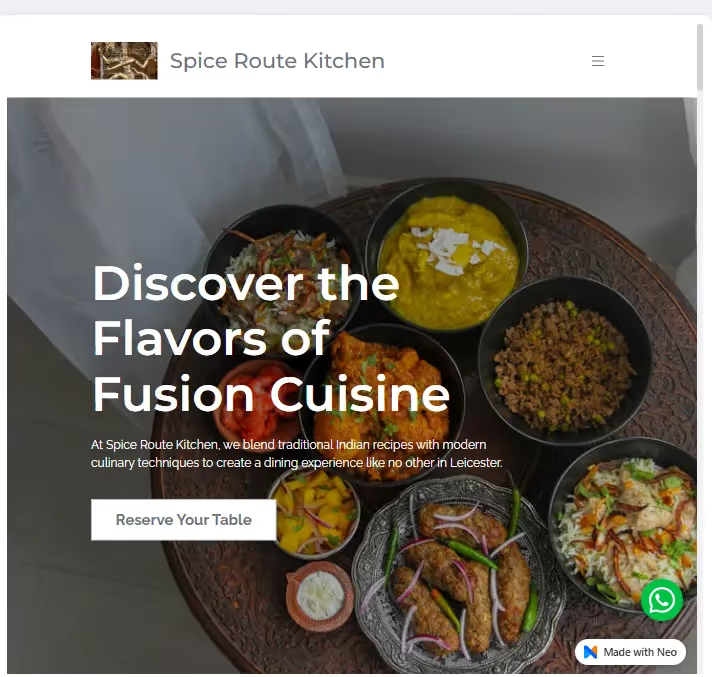
A small food and beverage business website must showcase its services and food in a manner that encourage visitor to order online or make a reservation quickly.
This template is for a small food and beverage business that features multi-cuisines as a background image. The hero section clearly specifies a fusion of cuisines and a short description with an added CTA to make a reservation, which is perfectly defined to drive reservations.
What makes this template effective?
- Integrates a visually appealing hero section with a background image.
- A strong conversion-focused CTA.
- Warm colors, layouts, and a mobile-friendly structure.
5. Thought Leadership or Content Website for a small business

Template Link: Thought Leadership or Content Website for small businesses
A thought leadership or content site template is created to facilitate reading, learning, and long-term interaction.
This template brings a clean layout that allows readers to focus on the hero section and clearly understand what the company offers. The contextual image also enhances the description and adds a professional touch to the template.
What makes this template effective?
- The clear headline communicates the purpose of the website.
- The action-oriented CTA ‘Start Learning Today’ is perfectly placed.
- Integrates a trust-building content with neutral color palettes, professional description, and clear messaging.
Things to Remember When Creating Small Business Websites
Launching a small business website requires planning because the website often becomes the first sales conversation with your customer.
- Design for decision-making, not decoration
Your homepage should help visitors decide whether to stay or leave within the first 5-7 seconds. This implies that it should have more readable typography, clear spacing, and obvious hierarchy than creative effects.
Never use sliders, animation, or large size graphics that slow down comprehension. If a visitor cannot immediately tell what you sell and who it is for, design has failed, regardless of how attractive it looks.
- Structure the website around customer questions
Instead of thinking in terms of sections like “About” or “Services,” structure the site around the questions customers actually ask. Start with what you have to sell and why it is important, then focus on the trust, evidence, and pricing background, and then only lead them into action. Each section should remove one layer of doubt, not introduce new information randomly.
- Make the business outcome explicit
Do not describe features in isolation. Associate each service or product description with a business outcome that the customer is interested in, e.g., by saving time, increasing risk reduction, raising revenue, or enhancing reliability. Replace vague claims like “high-quality solutions” with concrete explanations of what changes for the customer after working with you.
- Use proof that matches the buying stage
Different visitors need different proof. First-time visitors are more receptive to familiar logos, experiences, or social approval. Visitors who are decision-ready seek testimonials, case studies, before-and-after examples, or guarantees. Place proof elements intentionally near conversion points instead of grouping them in a single testimonials section.
- Design for ongoing updates, not a one-time launch
The design of your site must be user-friendly and simple to update without the need to redesign the pages. Modular sections should be used where you can easily add new services, testimonials, or announcements without compromising the layout consistency. This eliminates the outdatedness of the site and minimizes reliance on designers or developers to make minor modifications.
Tips to Drive More Traffic and Increase Conversion Rates
Here are some tips that owners can use to make their small business website conversion-friendly:
- Clear Calls to Action should match user intent
Generic CTAs should not be used everywhere. Use purposeful CTAs like ‘Get a Quote on Your Project’, ‘Check Availability’, or ‘See Pricing Options’, etc. Every CTA must indicate what the visitor is probably prepared to do on the page.
- Optimize mobile layouts separately, not automatically
Optimization of mobile layouts should not be an automatic process, based on desktop designs. Make sure that primary CTAs are not scrolling, the forms should be touch-friendly, and the text blocks should be divided into short and easy-to-read parts. A lot of B2B conversions occur on mobile, particularly when it comes to local and service-based businesses.
- Reduce language friction, not just word count
Simplifying language is not about writing less; it is about removing ambiguity. Use language that is friendly to customers. In case a phrase needs to be explained, rephrase it. If a phrase requires explanation, rewrite it. Visitors should never have to interpret what you mean.
- Place social proof near moments of hesitation
Add testimonials or credibility indicators directly below pricing sections, service descriptions, or forms. This reassures visitors at the exact moment they are deciding whether to proceed, rather than expecting them to search for proof elsewhere.
- Design forms to qualify
Only fill in form fields that you really need to respond to. Inclusively add one insightful question that shows intent, like "What problem are you attempting to solve?" This enhances the quality of lead without augmenting friction.
- Treat page speed as a conversion metric
Page speed decreases trust and interaction, and not only SEO ranking. Compress images, remove unnecessary scripts, and test load times on a regular basis. A fast website is an indicator of professionalism and trustworthiness, particularly when the small business competes with the bigger brands.
Benefits of Having a Small Business Website
Creating a small business website delivers long-term advantages that directly impact trust, visibility, and revenue. Below are the top advantages of a small business website that enhance credibility and business growth in the long term:
1. Full Ownership of Your Online Presence
A small business site provides you with total control over your brand, message, and customer experience. Your site is not influenced by changing platform policies, account limitations, or changes in algorithms, unlike third-party sites. This ownership brings in stability, and you can establish a long-term digital equity.
2. Increased Business Credibility
Customers expect legitimate businesses to have professional websites. A well-designed small business website instantly signals reliability and seriousness. Clear service pages, testimonials, and contact details can minimize hesitation and instil confidence, particularly for first-time visitors.
3. Better Discoverability Through Search Engines
Search engine optimized small business websites enable customers to locate you at the time when they are actively searching for solutions.
For example, when your site is optimized to such keywords such as ‘local bakery near me’ or ‘small business website designs’, you have a better chance of getting in the search results. In the long run, search engine traffic multiplies and provides targeted traffic that is steady and does not require continuous expenditure on advertisements.
4. Conversion-Focused Customer Journeys
In contrast to social media pages, small business websites are created to lead visitors to certain actions. Casual visitors are transformed into leads or customers with contact forms, booking links, inquiry buttons, and product pages. This makes your site a quantifiable sales and growth medium.
5. Centralized Business Information
A small business site serves as a one-stop shop for the truth about your business. It unites your offerings, pricing background, FAQ, contact information, and brand narrative. This minimizes confusion and enhances the customer experience.
The Bottom Line
Small business websites are no longer optional. They are the pillars of visibility, trust, and growth. With modern website builders like Neo Sites, even the smallest businesses can create professional, conversion-driven websites without technical barriers. By focusing on clarity, credibility, and customer intent, small business websites can become powerful engines for long-term success.
FAQs
1. Why do small business websites matter today?
They build trust, enhance discovery, and turn interest into customers in a competitive online setting. They also provide small businesses with complete messaging, customer experience, and long-term visibility on the digital platform.
2. Can a website replace social media for small businesses?
No, it supplements the social platforms by translating attention into owned leads and customers. A website makes sure that the development of the business will not rely on the volatile algorithms or restrictions of the platforms.
3. How much does it cost to build a small business website?
With modern builders, the cost is low and scalable, particularly in contrast to traditional development. Small enterprises do not require a lot of investment and can add functionalities as their requirements increase.
4. What should a small business website include?
Clear messaging, services or products, credibility signals, and contact options. It must also provide answers to frequent questions of the customers in advance to minimize the hesitation and decision time.
5. How can small business websites increase conversions?
By using clear CTAs, fast loading speeds, strong messaging, and trust-building content.Further, optimizing layout and placing proof near decision points further improves conversion performance.
Get Business Email
No domain name required
Get your Small Business Online
with Neo Sites
